Article: Solid silver: why does this precious metal last a lifetime?

Solid silver: why does this precious metal last a lifetime?
Solid silver lasts because it can be cared for, polished, repaired, and recycled without losing its material value. Whether 925 or 950, it develops a patina over time instead of wearing away like plating. It is a metal made to be worn, then passed on.
Solid silver: a timeless precious metal
Solid silver is an investment for a lifetime and beyond.
Over time, it loses neither its value nor its quality.
That is why I have chosen to work specifically with solid silver.

925 Silver and 950 Silver: understanding the alloys
When we talk about solid silver, we are referring to an alloy in which pure silver is the dominant component. This is an important distinction, as there are many counterfeits on the market. These include silver-plated items that look like solid silver (but wear away quickly), or fake alloys that tarnish within a few months. Knowing how to identify solid silver is therefore essential before making any purchase.
925 Silver (or solid silver) contains 92.5 per cent pure silver and 7.5 per cent other metals, usually copper. It is the international standard in Jewellery, and for good reason. This composition combines strength and beauty. Pure silver on its own would be too soft to last, too fragile to withstand the weight of a lifetime’s wear on the wrist or around the neck. A small percentage of copper strengthens it without altering its nature.
950 silver contains 95 per cent pure silver. It is more refined, purer and also softer. It allows for very fine handcrafted craftsmanship and is perfect for hand-forged pieces where precision is essential. I mainly use 950 silver for my handcrafted creations, even though the official 950 hallmark does not exist (it will always be hallmarked as 925).
In both cases, you are working with a precious metal – one that truly stands the test of time and can be passed down from generation to generation.
The patina of silver: a signature of time, without deterioration
Solid silver is a living material. On contact with the air and your skin, it develops a slight ‘oxidation’. This is what is actually known as a patina. Many people see this as tarnish, something to be avoided. Connoisseurs who love this metal – and Myself – see this patina rather as a marvel, as a signature of time and life.
It gives the jewellery character, almost a personality of its own. Each piece of jewellery will develop its own patina depending on how it is worn, what it has been exposed to, and also on the chemistry of your skin. Two pieces of jewellery leaving my workshop on the same day will have completely different stories to tell in 200 years’ time.
The patina does not damage the metal. This is a crucial point that many fail to understand. In fact, this ‘oxidation’ only appears on the surface, whilst the metal remains entirely intact. A quick polish or gentle clean and your piece of jewellery will regain its original lustre. Many people choose to keep this patina precisely because it has a certain charm and develops character as time goes by.
It is this ability to evolve without becoming damaged that appeals to those seeking authenticity.
Durability, reparability, recycling: a resilient metal
Solid silver withstands the rigours of daily life: light knocks, friction and temperature changes. It holds up well. It is a resilient metal, capable of withstanding the demands of everyday life.
It is easy to repair. A broken prong on a ring, a bent band or even a brazed joint that needs reworking: everything can be restored by a jeweller. A piece of solid silver jewellery can therefore be restored, adjusted or transformed. Nothing is permanent or beyond repair.
It can be recycled endlessly without losing any of its quality. This is an environmental aspect that matters a great deal to me. A worn piece of jewellery can be melted down and transformed into a new creation. Silver does not deteriorate: it is reinvented. An heirloom that is no longer passed on can become something new for the next generation. Your grandmother’s piece of jewellery, which you no longer like, can be transformed into a bespoke creation just for you.
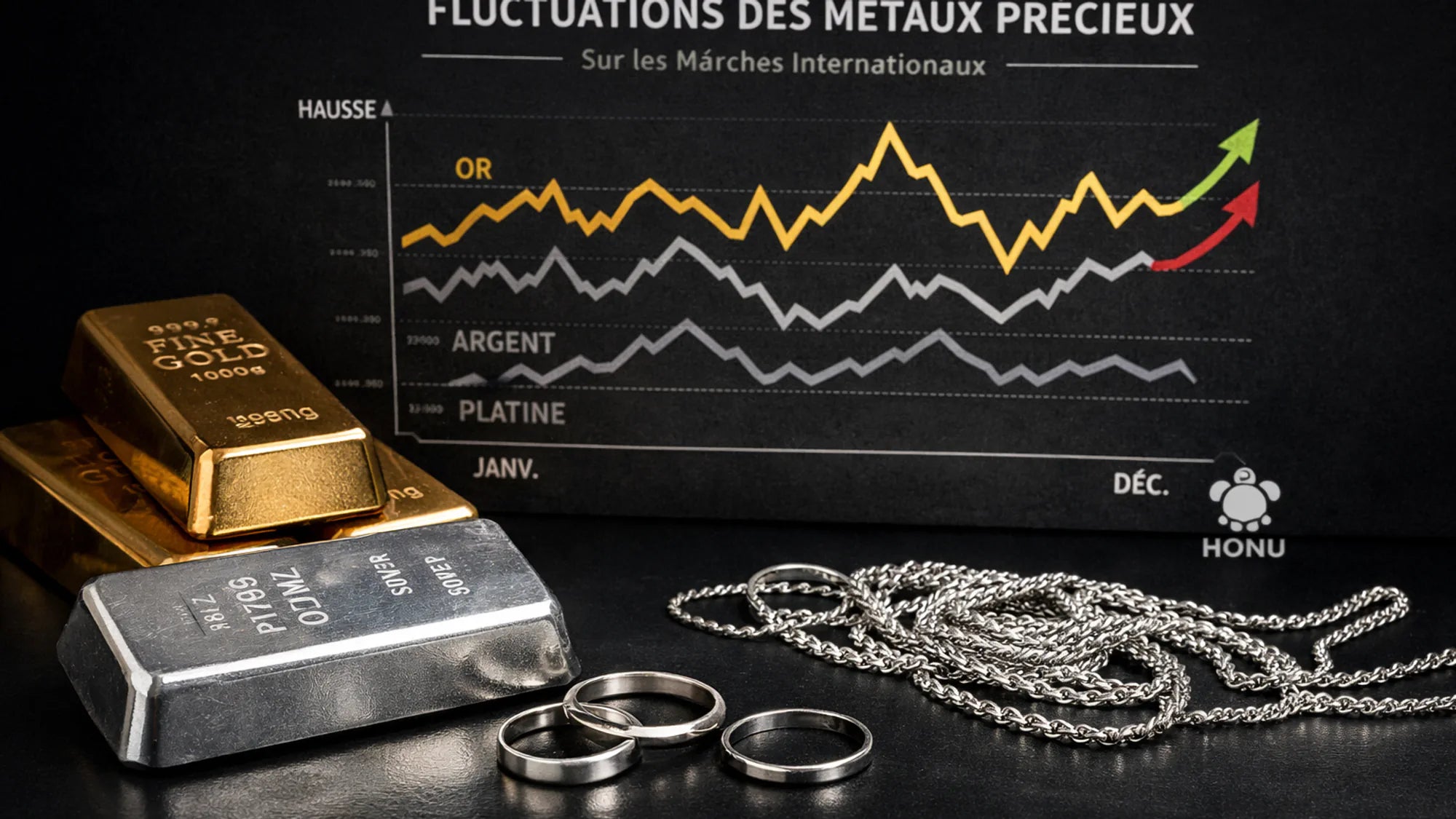
It’s a choice that makes sense, both for your wallet and for the planet. At a time when the price of precious metals is fluctuating, solid silver remains a sensible investment.

Why Honu works specifically with solid silver
Because it is a noble, precious, beautiful and ‘living’ metal. It is a pleasure to work with (although it does have its ‘moods’... I’m referring here to the fire spots that would drive any designer of solid silver jewellery ‘crazy’...).
But I forgive it its quirks because it stands the test of time without losing its lustre, keeping pace with your lifestyle. It accompanies you and ages with you; it develops character over the decades and is passed on with pride.
Why do we talk about ‘living silver’?
Technical note: silver is a metal of mineral origin and is not, in the strict biological sense, a living being. However, it is described as ‘living’ in traditional jewellery terminology to reflect its constant reactivity: it oxidises and develops a patina on contact with air, skin, moisture and sulphur-based products, evolving in a way that is unique to each piece and each wearer. This evolution is the hallmark of a pure metal that interacts with its environment. Regular polishing allows its lustre to be restored as often as one wishes.
This expression is well-established in the jewellery trade, which refers to the ‘moods’ of the metal, particularly the fire spots that appear when heated over a flame. It should not be confused with the historical term ‘vif-argent’, which referred to mercury in ancient chemistry.
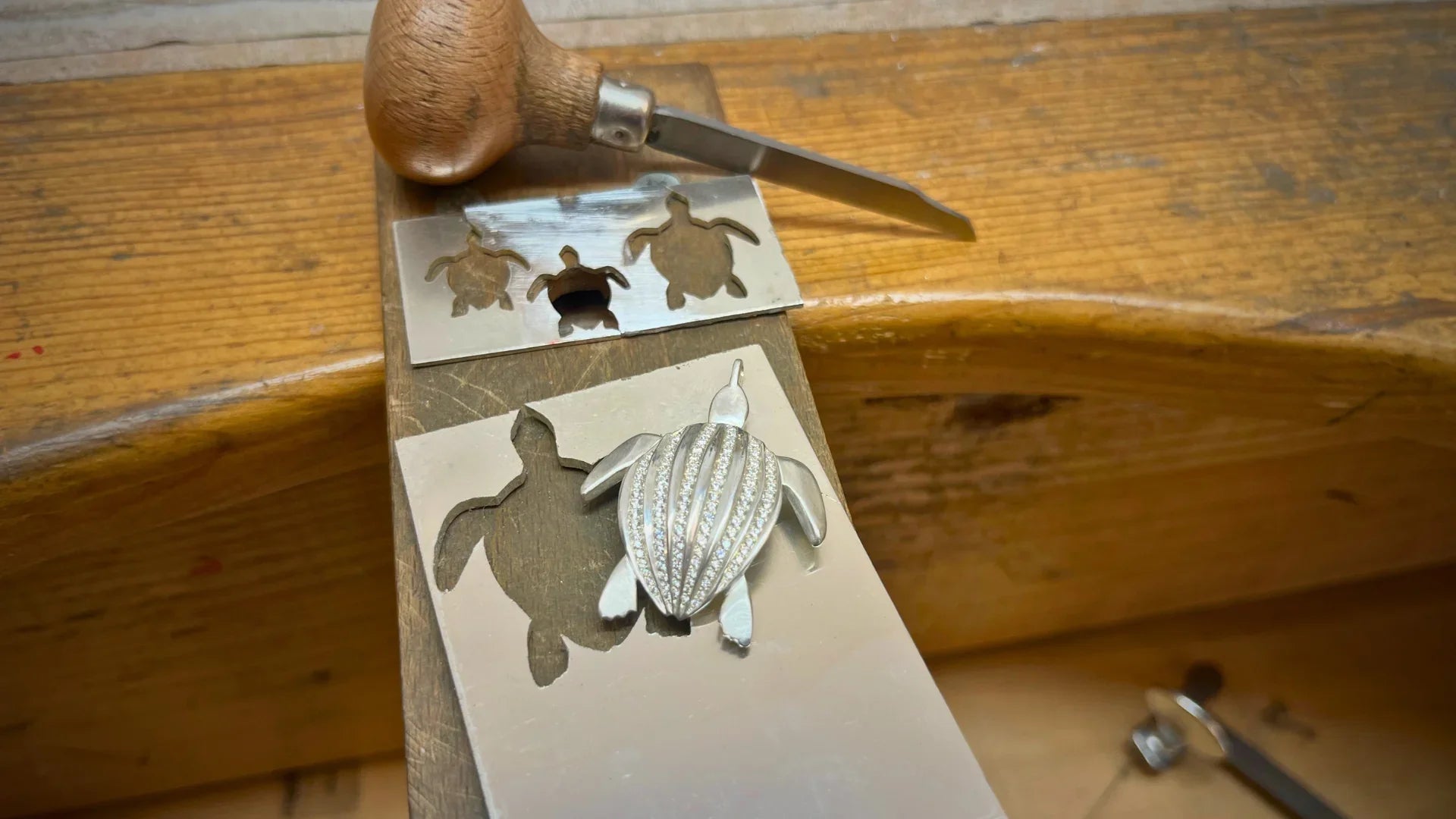
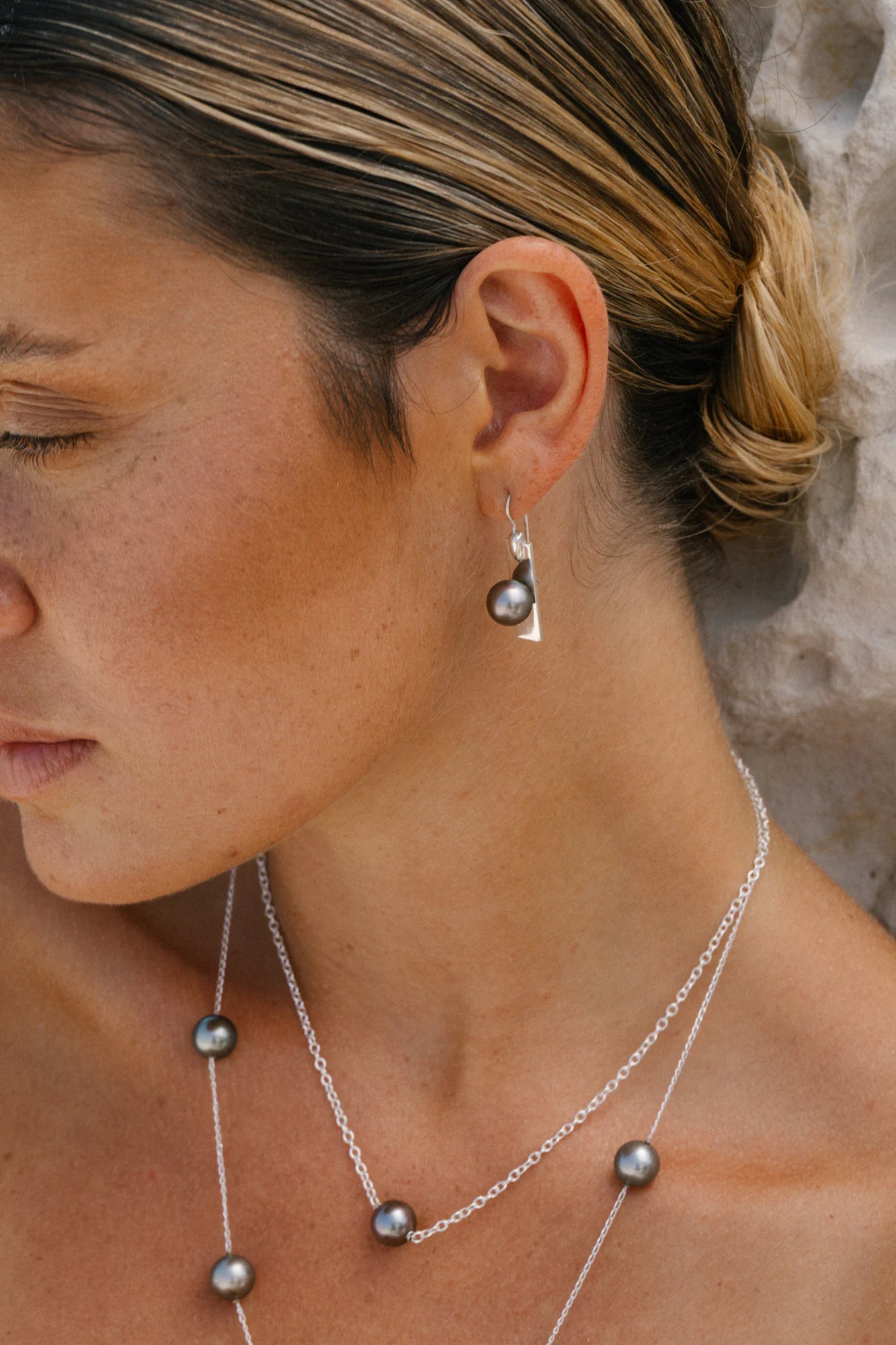
At Honu, every solid silver creation is hand-forged. Every stroke of the tool carries an intention and every curve is the result of careful thought.
And all of this bears my signature, that of a designer who rejects mass production and casting.
Before long, your piece of jewellery will bear your own signature, as it will be shaped by your habits, your movements and your life. It is the story you share with it that makes it so precious.
Discover my solid silver jewellery and find the piece that will be with you for a lifetime.