
Article: Gold and Silver Price Fluctuations in 2025 and 2026: Impact on the Jewelry Industry and Buying Advice
Gold and Silver Price Fluctuations in 2025 and 2026: Impact on the Jewelry Industry and Buying Advice
When gold and silver rise, the price of a handcrafted jewel does not depend only on the metal rate. It also includes material loss, workshop time, technical complexity, and finishing. Understanding these elements helps read the fair price of a precious metal piece.
Are you wondering why gold and silver jewellery has been more expensive since 2025? Why does your jeweller charge higher prices than you would have estimated based on metal prices? Or whether it would be wise to invest in these precious metals despite the correction in early 2026?
Find out in this article how the dramatic rise in precious metal prices is influencing the jewellery market. Whether you’re looking to buy a piece of jewellery or want to understand the value of your own pieces, I’ll explain everything about the historic price rises of 2025 and, above all, how these fluctuations actually affect jewellery prices.
2025: A record-breaking year for gold and silver
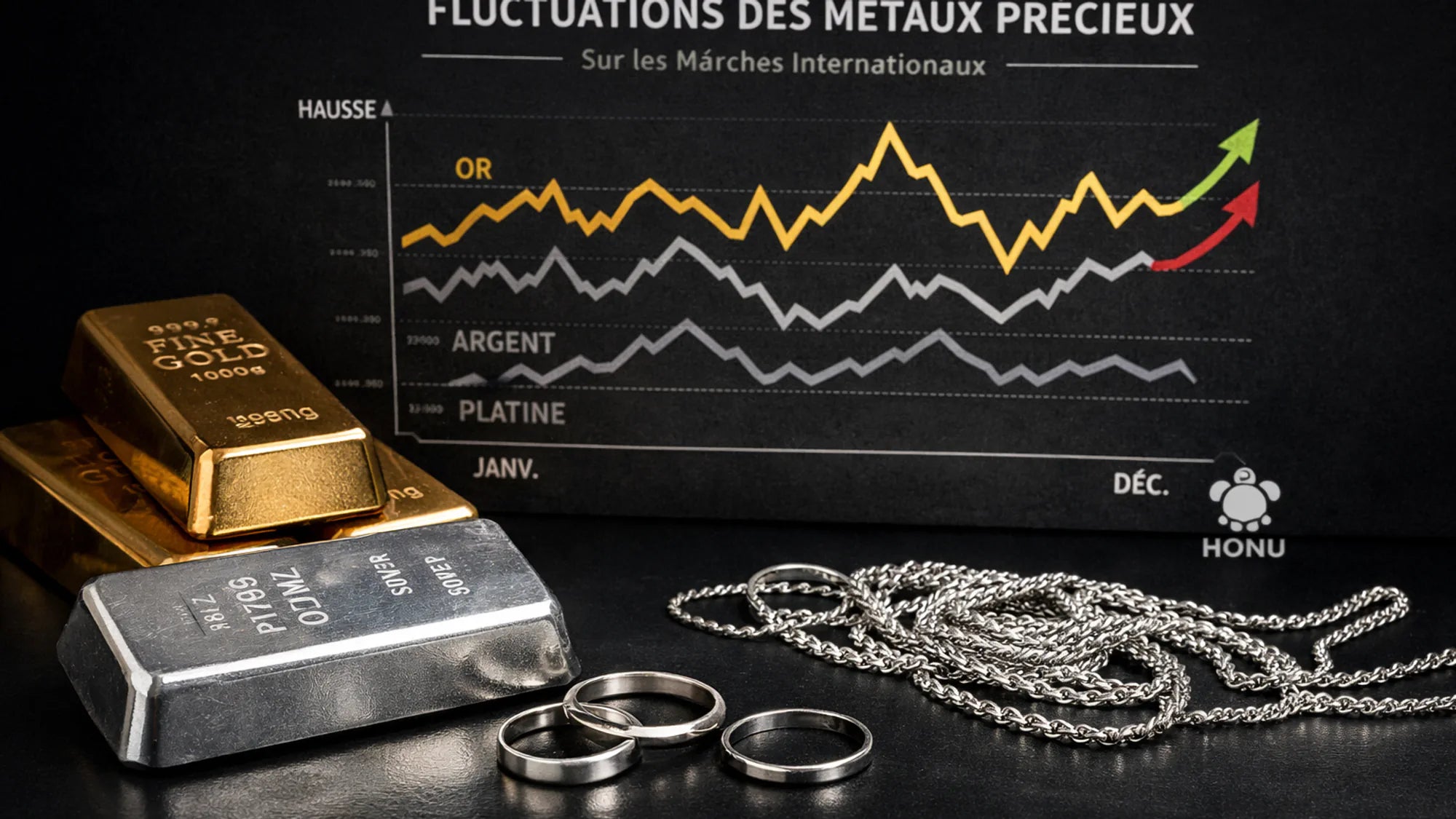
The year 2025 will go down in history as one of the most exceptional for precious metals. Gold experienced a meteoric rise, breaking all-time records with an annual increase of nearly 65 per cent. By the end of the year, the price of gold had reached highs of close to $4,500 per ounce, peaking on 24 December 2025 at $4,522.
This surge can be attributed to a combination of several factors:
- A tense geopolitical climate and growing global economic uncertainty
- Accommodative monetary policies by central banks
- Massive gold purchases by central banks, particularly in Asia, to diversify their reserves
- Sustained demand from investors seeking to protect their capital against inflation
Silver has outperformed gold, rising by 150%
The white metal has recorded its best performance since 1979, with a spectacular rise of around 150% over the year. This exceptional rise is underpinned by two factors: very strong industrial demand (solar panels, electric vehicles, artificial intelligence) and renewed interest from investors who see silver as an accessible safe-haven asset and a strategic metal for the energy transition.
In early 2026, the markets experienced a correction. Following these historic highs, prices fell by a few per cent. This correction, triggered by profit-taking and a slight strengthening of the dollar, is to be expected after such a sharp rise. It does not call into question the underlying upward trend.
Why gold and silver are safe-haven assets
For decades, gold has been recognised as THE ultimate safe-haven asset. In times of economic uncertainty or geopolitical tensions, institutional and retail investors turn to gold to preserve their wealth. This confidence is based on limited supply, its historical role in central bank reserves, and the perception that it retains its value when other assets collapse.
Silver, long regarded as gold’s ‘little brother’, saw its status change in 2025. It now fulfils two roles: a precious metal for portfolio diversification, and a key raw material for cutting-edge industries. This dual nature enhances its appeal as an investment.
The spectacular rise in prices in 2025 has once again highlighted the strategic importance of these metals in a diversified portfolio.
The real impact on jewellery prices

The price paid by a jeweller is never limited to the simple ‘spot’ price of the pure metal. Jewellery is made from specific alloys (18-carat gold containing 75 per cent pure gold, 925 Silver containing 92.5 per cent pure silver), which involves a whole process of transformation.
Here are the factors that make up the final price of a piece of jewellery:
- The fineness and purity of the metal : the jeweller buys metals that have already been purified and are sometimes pre-alloyed, the price of which differs from that of raw metal
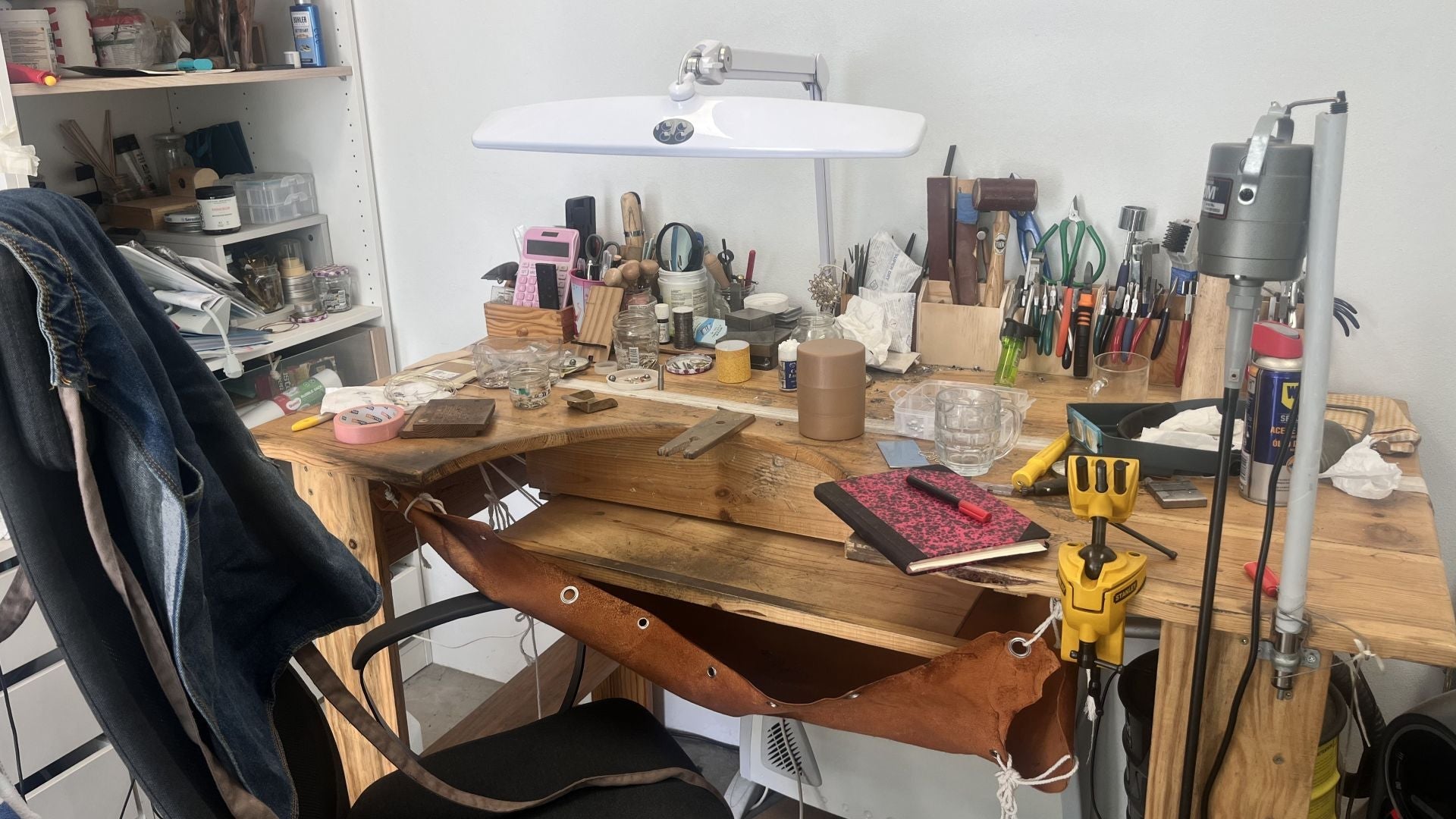
- Manufacturing costs : casting, precision machining, polishing and stone-setting, these are handcrafted stages requiring expert craftsmanship
- Skilled labour : the time spent by a jeweller accounts for a significant proportion of the final price
- Taxes and profit margins, depending on legislation and distribution channels
Result: even if the price of the metal fluctuates dramatically, the final price of a piece of jewellery reflects a combination of raw materials, handcrafted craftsmanship and manufacturing costs. This is why high-quality jewellery can be significantly more expensive than the simple value of the metal by weight.
This distinction is essential to understanding Jewellery pricing. The cost is based on the ‘workable’ metal and all associated costs, not solely on the raw market price quoted on the stock exchange.
Key points to bear in mind before buying
The dramatic rise in the price of gold and silver in 2025 reminds us of a fundamental reality: precious metals remain benchmark assets, both for investment and for the creation of timeless jewellery.
When you buy a piece of gold or silver jewellery, remember that the price reflects the entire value chain: metal processing, manufacturing expertise, the craftsman’s skill, and regulatory and tax requirements.
Understanding how this works enables you to better assess the true value of a piece of jewellery, particularly for high-end pieces which constitute a genuine family heirloom that can be passed down from generation to generation.
If you’d like to find out more about the metals used in my creations, their fineness, or discover the handcrafted process that brings each unique piece to life, please feel free to explore our Collections.
Choosing a piece of jewellery means choosing a precious material, exceptional craftsmanship and a value that will be a lasting part of your heritage.

Sources: BullionVault, LBMA, Kitco, World Gold Council, Silver Institute (January 2026).
Frequently Asked Questions
Silver recorded its best performance since 1979, with a spectacular increase of around 150% in 2025. This increase can be explained by two factors: very strong industrial demand (solar panels, electric vehicles, artificial intelligence) and renewed interest from investors who see silver as an accessible safe haven and a strategic metal for the energy transition.
The price of jewellery never reflects only the price of the raw metal. It incorporates the entire value chain: the transformation of the metal (925 silver with 92.5% purity), machining and manufacturing costs (casting, polishing, setting), the jeweler's labor time, as well as taxes and commercial margins. A piece of quality jewellery is worth much more than its weight in metal.
Yes, silver now combines two complementary profiles: that of a precious metal valued for portfolio diversification, and that of a raw material essential to cutting-edge industries. The correction in early 2026 is normal after such a rise and does not call into question the underlying upward trend. Silver remains a tool for preserving capital and hedging against inflation.
Absolutely. High-quality solid silver jewellery is a real investment and a true family heirloom. Unlike raw metal, it incorporates exceptional craftsmanship and emotional value. Its durability allows it to be passed down from generation to generation. Choosing 925 silver jewellery means choosing a noble material whose value will remain a lasting part of your heritage.