Article: Conversations: I look back at the origins of Honu Handmade Jewellery
Conversations: I look back at the origins of Honu Handmade Jewellery
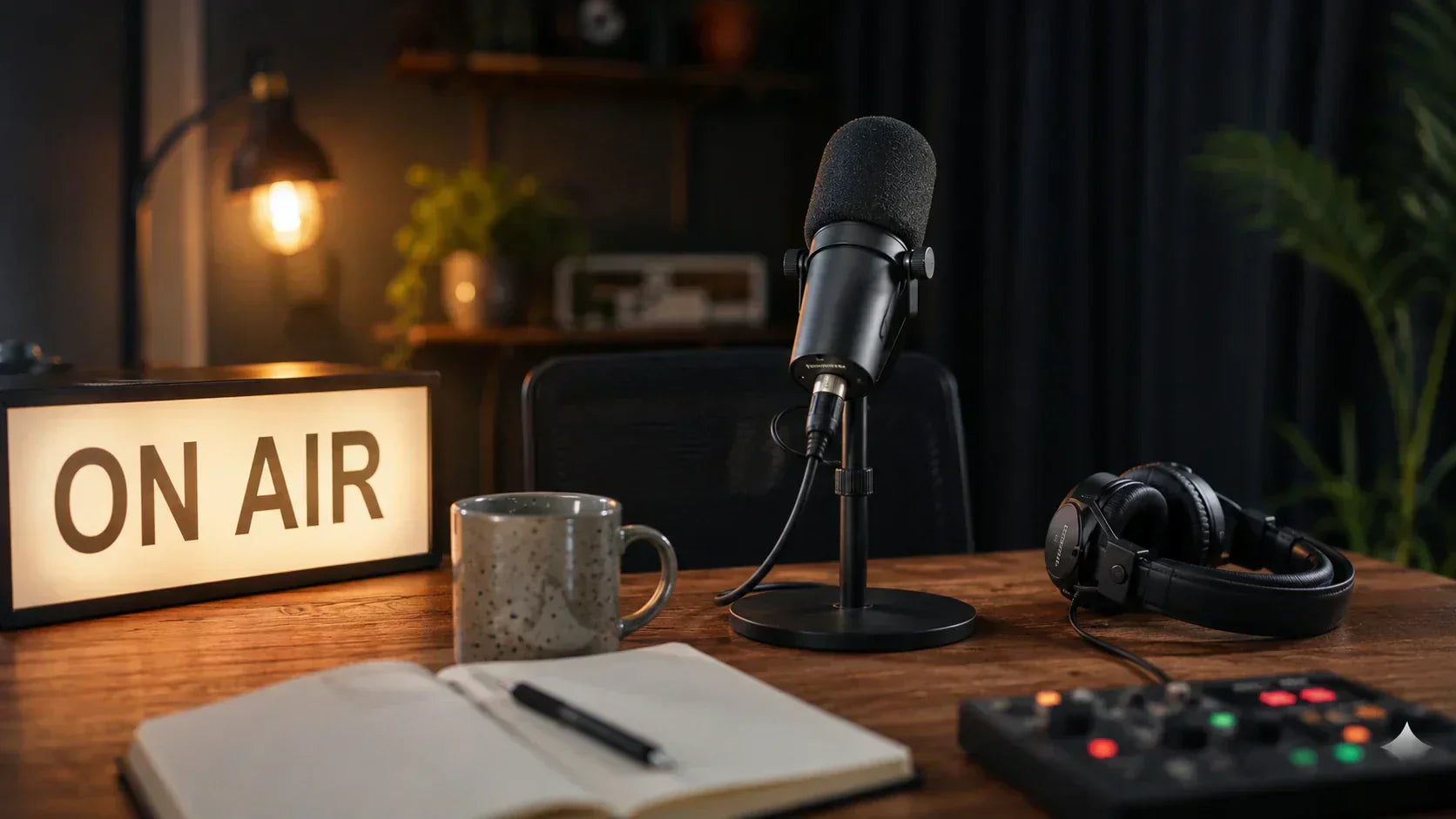
In the Born To Hustle podcast, I talk about what led to Honu Handmade Jewellery: a family heritage rooted in metal, a Congolese culture where jewellery is part of one’s identity, and the desire to bring beauty back into life. A conversation about the brand’s origins, its materials and its commitment.
Vanessa Goma-Kick, my long-time friend and founder of the Born To Hustle podcast, invited me to share the story of Honu Handmade Jewellery. Vanessa is one of those rare voices who shines a light on women and mum entrepreneurs with total sincerity: she has supported me and my brand right from the very start. Over two episodes, we talked about what has brought me this far: a heritage, a culture, and the desire to bring beauty back into life.
Two men, one legacy
My maternal grandfather was a foundry worker. My father, in his youth, was an apprentice jeweller. I never knew my grandfather, and I knew my father as a shopkeeper: life’s circumstances forced him to abandon his plan to become a jeweller. I never saw either of them at work.
Yet I own a few pieces that my father made by hand at the age of sixteen, without casting. And on my workbench, I’ve hung one of his brooches in silver. I call it my little star: it watches over me, and when I get stuck on a technique, I look at it and the solution comes to me.
I think this desire to work with metal has been passed down to me. It’s a genetic legacy, rather than something I’ve learnt. Today, I’m perhaps doing what my father wasn’t able to do.
Congo in my DNA
I was born in Brazzaville and grew up between Brazzaville and Pointe-Noire. The beauty of Congolese women has always impressed me: they know how to look their best and stay that way in any situation, through carefully chosen accessories: clothing, and of course, jewellery. This philosophy of the refined touch is a cultural anchor, ingrained in their DNA.
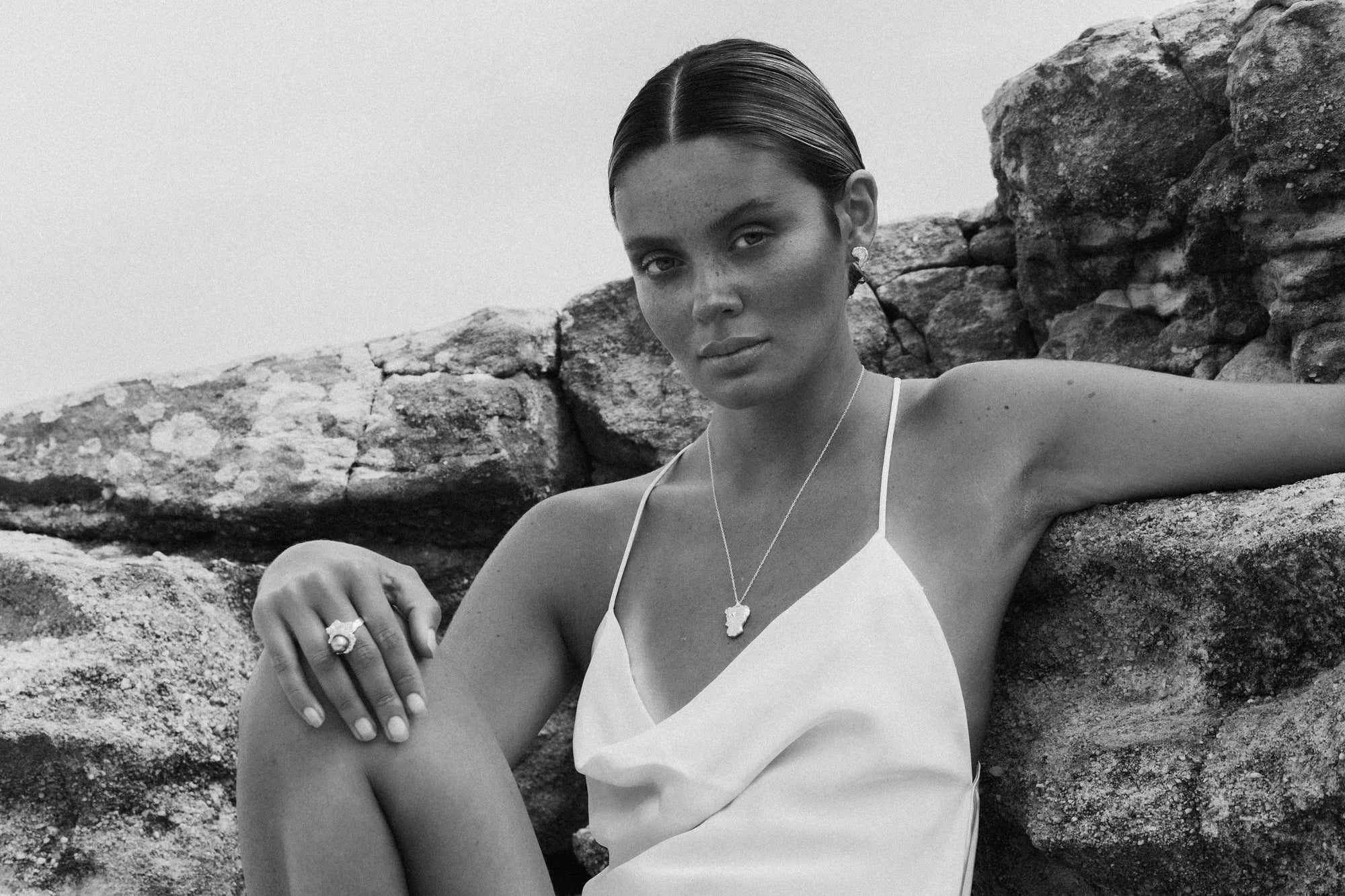
The slogan I chose for Honu Handmade Jewellery, “More than just jewellery, it’s in our DNA”, expresses my family heritage in terms of a passion for metalwork, but also this deep-rooted connection to the culture of accessories. For me, jewellery is about identity: it expresses who we are, and that is exactly what I offer my clients. The unique piece of jewellery that allows them to assert themselves, to express their innermost ‘self’, their character, their uniqueness.
From creative outlet to workshop
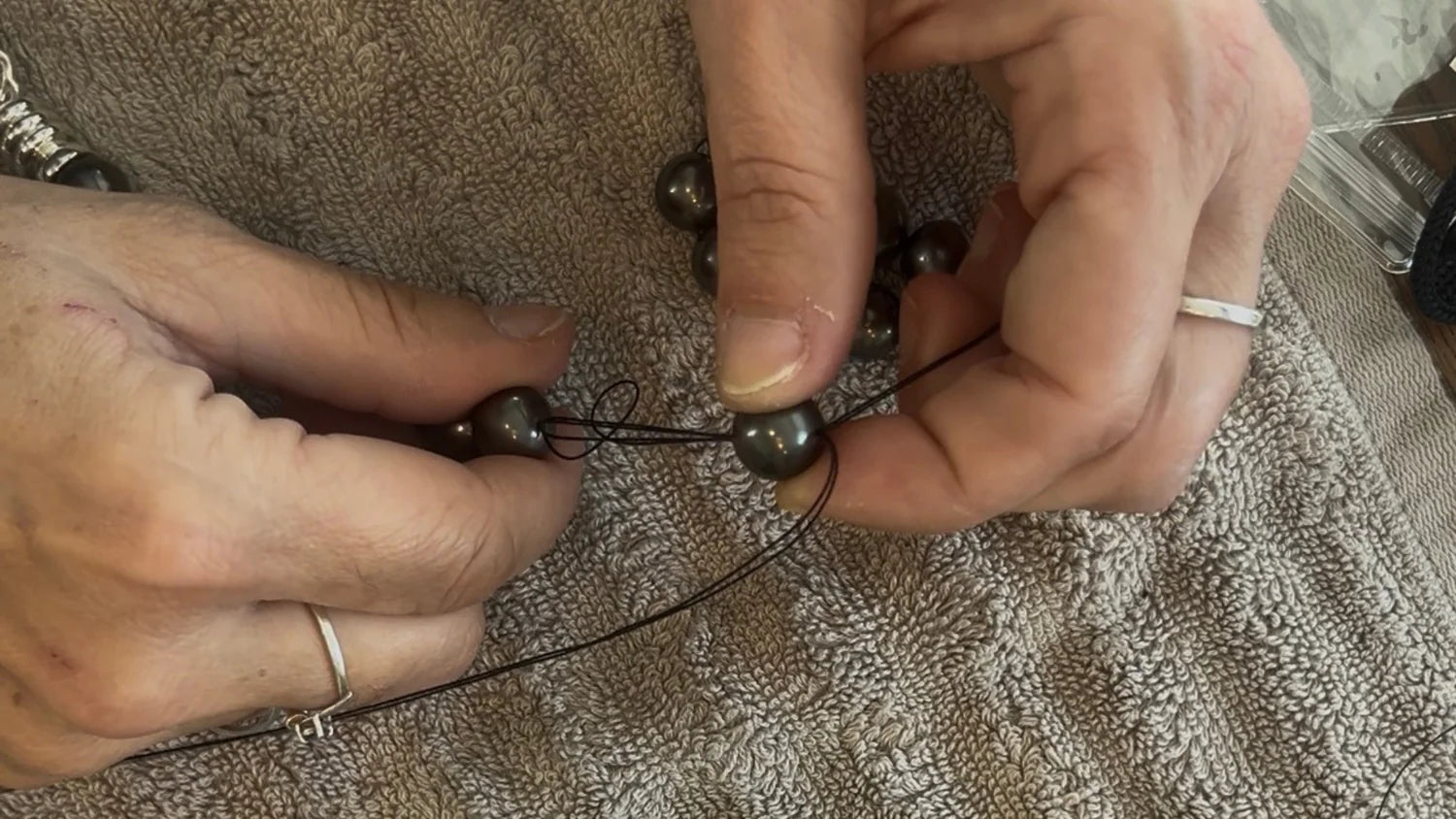
For seven years, I worked for the same organisation, a company where I was employed. By the end, I was mentally and physically exhausted. I needed a break, and above all, to bring beauty back into my life. In 2023, I took up Jewellery-making in the same way one takes up gardening: just to breathe. I wanted to see if I could create something with my own hands, and to my great surprise, I managed it, which encouraged me to take it further. I started with a few online courses taught by Caroline, a Jewellery tutor and founder of objectif-bijoux.com. Caroline is one of those rare people who share their knowledge with sincerity, efficiency and simplicity. Then, in 2024, I decided to take the plunge and create my own jewellery brand, Honu Handmade Jewellery. I then obtained all the necessary qualifications to practise my new profession.
I also enrolled at a jewellery school in Lisbon, the Triboulet School (Triboulet.pt), as I needed to consolidate and feel confident about the basics I’d learnt on my own. As well as obtaining my certificate from this school, I met some wonderful people, my master jeweller Miguel and his wife Elsa, who encouraged me from the very start and still support me today in all my projects.
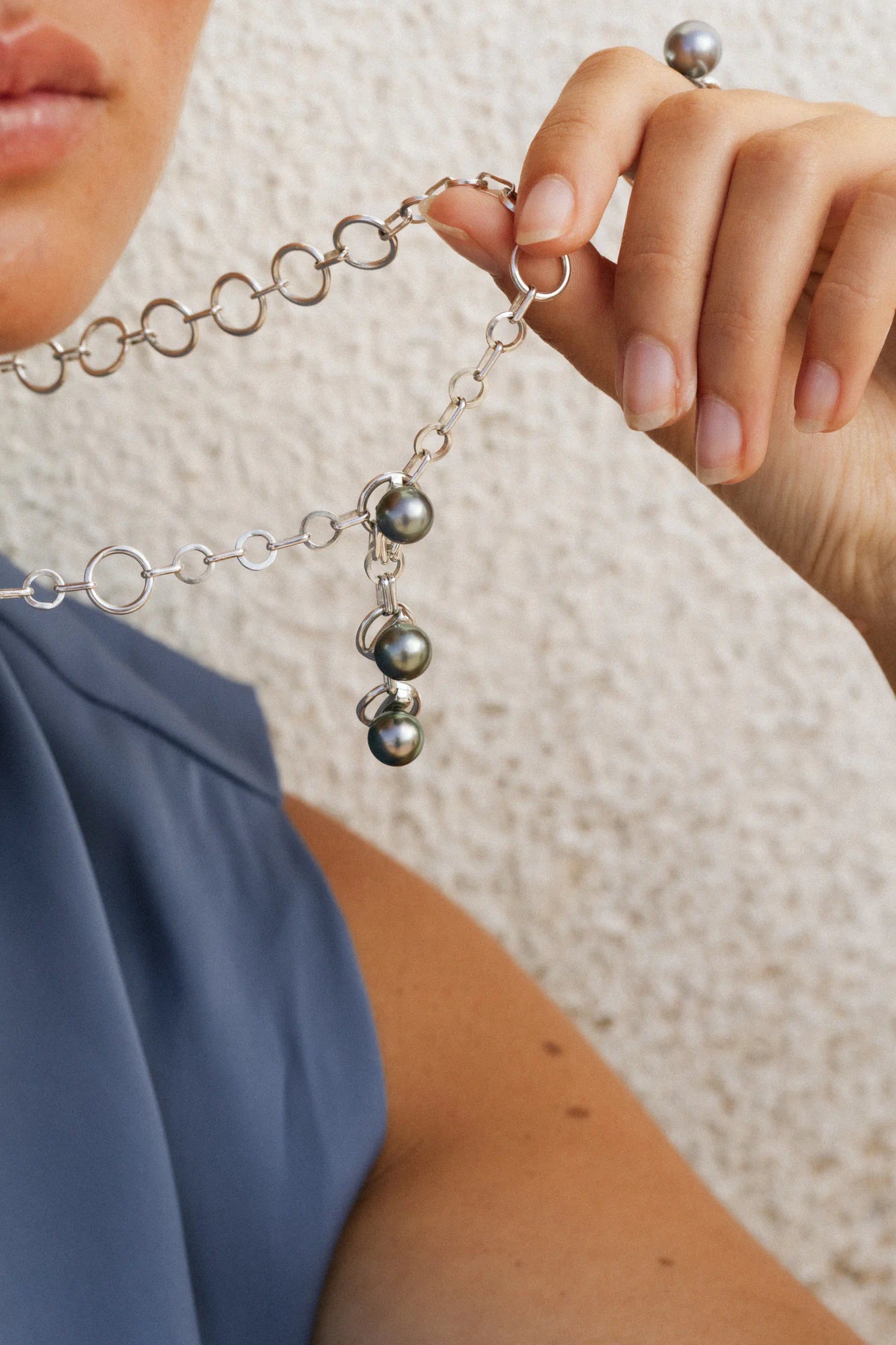
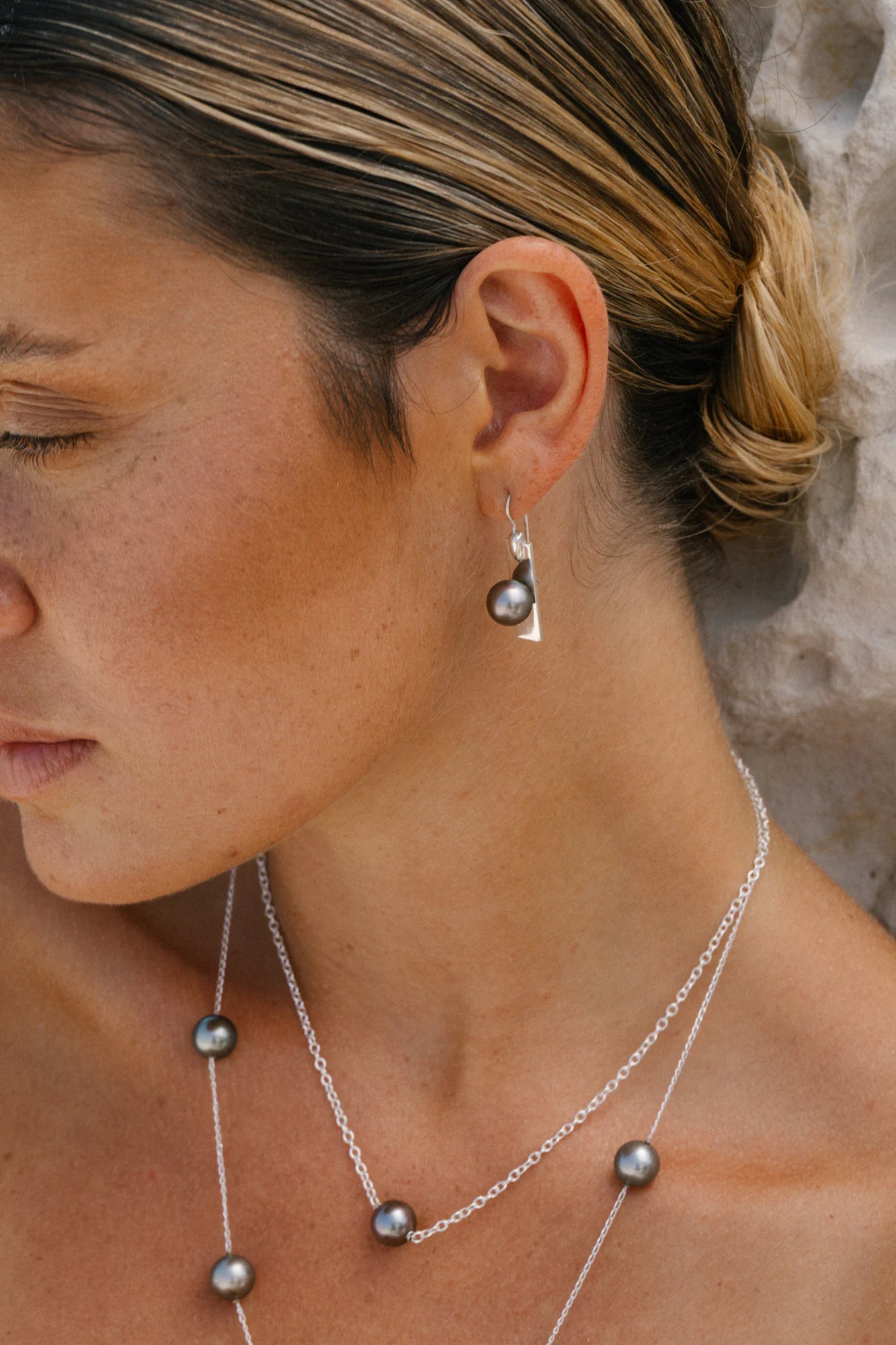
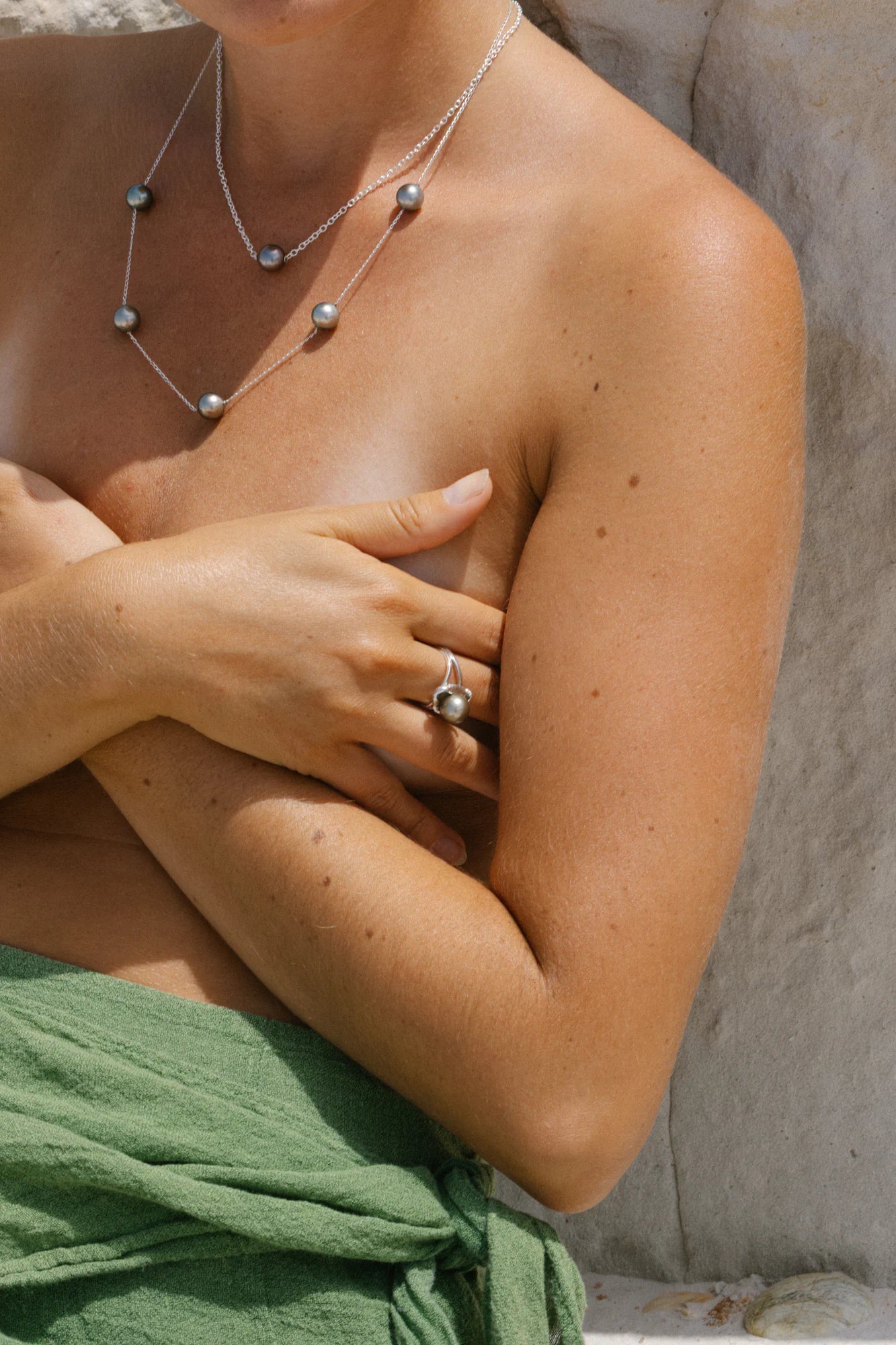
Solid silver and Tahitian pearls: living materials
Solid silver is my main material. It’s a pleasure to work with, but it has a secret: when polished, copper bubbles sometimes rise to the surface, what are known as ‘fire spots’, and this is unsightly. It’s a bit of a nightmare for me, but it’s also a challenge that each of my creations presents.
The Tahitian pearl is my friend Audrey, my soul sister for thirty years, who lived in Tahiti and introduced me to this marvel. I then realised that a pearl is alive: it is born in an oyster, its shape and colour are a surprise, and if it is not looked after properly, it loses its lustre until it dies. That is also why pearls feature in my slogan: each one has its own DNA.
Why do we talk about a ‘living pearl’?
Technical note: the Tahitian pearl is not a living organism in the strict biological sense of the academic definition (it has no active metabolism once formed). But it is described as ‘living’ in traditional jewellery terminology because its organic material remains reactive: it evolves with its environment, feeds off contact with the skin which rehydrates its matrix, and can permanently lose its lustre if it is not worn and cared for. Jewellers even speak of a ‘dead’ pearl to describe one whose lustre has been permanently lost.
This terminology is recognised by Polynesian pearl farmers, by major international jewellery houses (Mikimoto, Tasaki, Wan Pearls) and recognised by the leading bodies GIA (Gemological Institute of America) and CIBJO (World Jewellery Confederation), which classify pearls as organic gems as opposed to mineral gems.
My preferred technique is chiselling: I carve the design directly into the block of metal using traditional cutting tools known as chisels. I do not sketch my pieces before making them: inspiration strikes at the workbench, and the jewellery reveals itself as I go along. I then sketch what I have created afterwards. No piece is cast, none is mass-produced. It is meticulous, precise and slow work. This is what is now known as ‘slow luxury’, and it is my way of working and respecting the material.
Three collections, one vision
Lagon is my first Collection. It stems from my love of the marine world, and that is also where the name Honu comes from: in the Polynesian language, Honu means ‘sea turtle’. The turtle embodies longevity, resilience and the ability to adapt, both on land and underwater.
Joséphine B. is my second Collection, inspired by Art Deco, in homage to Josephine Baker. It is a message that is close to my heart. When I tried to polish these geometric pieces to a mirror finish, the fire marks kept reappearing: I had to start over and over again until I achieved the precision I was aiming for.
Brut. was born out of a creative accident. One day, I wanted to melt down some jewellery scraps that I wasn’t happy with. My blowtorch faltered, didn’t quite finish the job, and under the flame, shapes began to take form. I kept them. Every piece of Brut. bears the mark of that moment: the material left deliberately raw, like the surface of a meteorite.
My commitment to sea turtles
In the second part of the conversation, I discuss my partnership with Renatura Congo: a natural collaboration with a Congolese NGO that has, since its inception, been working for the conservation of sea turtles and the preservation of their ecosystem. I owe this connection to sea turtles, which I am passionate about, but also to my adopted country, the Republic of the Congo. In practical terms, my commitment takes the form of a direct contribution from my turnover: 1% on all my jewellery, and 5% on pieces from the upcoming Kalunga capsule collection.
Thank you to the entire Renatura Congo team for their daily dedication and for the remarkable fieldwork they have been carrying out for over twenty years alongside local communities, fishermen and the sea turtles that come to lay their eggs on the Congolese coast. What you do matters. Honu Handmade Jewellery is delighted to be able to contribute to this.
Thank you to Vanessa Goma-Kick for giving me this space to tell the story behind the jewellery, the story that lies before it. Born To Hustle is her podcast: two interviews a month with women and mum entrepreneurs, whom she calls ‘Momagers’, those who juggle family life and a career. Vanessa gives a voice to these women who build, who doubt, who start again, and who eventually forge their own path. I was lucky, and delighted, that she welcomed me among these voices.
You can find it on the podcast’s YouTube channel and on the main streaming platforms.