
Article: Your Hands: Have You Ever Thanked Them?
Your Hands: Have You Ever Thanked Them?
The hand is humanity's first tool. It feeds, builds, heals, creates, then carries the traces of what it has learned. From Cueva de las Manos to the jeweller's bench, this article pays tribute to hands, their memory, and handcrafted gesture.
27 bones, more than 30 muscles, and 17,000 nerve endings. Just like our feet, which carry us silently from morning to night, our hands are among those tools we don’t pay enough attention to.
They’re right there, at the ends of our arms. We use them without thinking, just as we breathe. We reach for a glass, rest them on a shoulder, close them around a tool. They obey so quickly that we forget they exist. And yet, the hand is humanity’s first tool, the only one we’ve never needed to invent. And perhaps, of all tools, the one that reveals the most about the person using it.
Hands don’t lie; they carry within them the gestures of a lifetime. And if we take the time to observe them, every pair of hands tells the story of the person using them.
The hand, a universal symbol

Humanity’s earliest artistic traces are neither drawings of animals nor abstract symbols. They are hands. In the Cueva de las Manos, in Argentine Patagonia, more than 2,000 handprints were left on the walls approximately 9,500 years ago. Men and women pressed their palms against the rock and blew pigment around them, leaving their silhouettes in negative. This gesture, the oldest known in South American cave art, conveys a simple message: I was here, and my hand is proof of it. The site has been a UNESCO World Heritage Site since 1999.

This symbol has never stopped traveling. The Hamsa, this open hand with five spread fingers, has traversed cultures since ancient Mesopotamia. A sign of protection among the Phoenicians, the Hand of Miriam in Judaism, the Hand of Fatima in Islam, it is worn today on every continent as a talisman against the evil eye. The word khamsa means “five” in Arabic and Hebrew.
In Lausanne, an entire museum is dedicated to the hand. The UNIL-CHUV Hand Museum, founded in 1997 by surgeon Claude Verdan, explores the connections between the hand, the body, and society through immersive exhibitions blending science, art, and culture. To date, it is the only museum in the world dedicated to this organ that we use every day without ever stopping to look at it.
Those that nourish, those that shelter, those that save
Every profession leaves its mark on the hands of those who practice it. Calluses, scars, the flexibility or stiffness of the joints: all of this reads like an open book.
There are the farmer’s hands, rooted in the earth from dawn, skin weathered by sun and cold. Large, sturdy hands that nourish.
There are the hands of the mason, who builds a wall brick by brick and knows the exact weight of the mortar on the trowel before his mind has calculated it. Hands that shelter us.
And there are the surgeon’s hands, precise to a tenth of a millimeter, capable of suturing a vessel barely visible to the naked eye. Hands that save.
What these gestures have in common is repetition. Ten thousand times the same movement, until the body internalizes it and the hand acts on its own, freed from conscious thought. This is what we call craftsmanship, and it is acquired only through time and practice.
The artisan jeweler’s hand: the one that creates

There is a difference between replicating a gesture and inventing one. Industrial craftsmanship is programmed, calibrated, and identical from one piece to the next. A mold produces the same result with every pour. Artisanal craftsmanship, on the other hand, adapts to the moment. It is this approach that defines my Brut collection, where every mark on the metal tells a story.
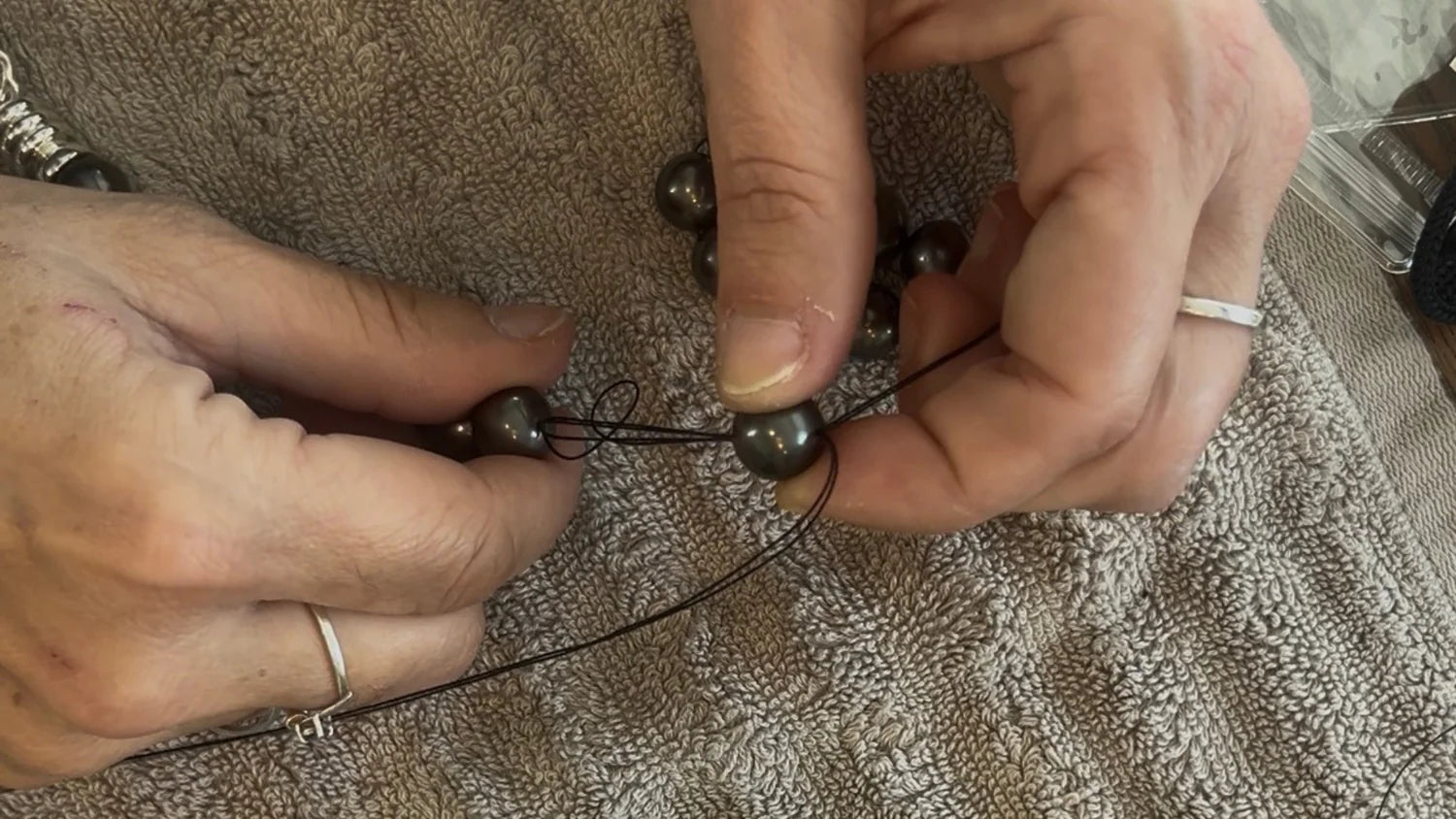
The artisan jeweler’s hand is the one that creates beauty and joy. It delegates nothing to the machine. It cuts, shapes, solders, files, and polishes. It senses when the metal is ready to bend, when it still resists, when it has reached that precise point where it agrees to become something else. This knowledge cannot be programmed. It is acquired piece by piece, year after year.
It is the thumb-and-index-finger grip that makes all the difference. It measures, adapts, and corrects in real time. A robot can repeat an identical gesture a million times. But it cannot sense that the material, this morning, is not reacting quite the same way as yesterday.
This is also what distinguishes a handcrafted piece of jewellery from one produced on an assembly line. The direct and continuous contact between the hand and the metal ensures that each piece is unique. Reproducing the exact same gesture is simply impossible, and that is precisely what gives each piece of jewellery its character.
My own hands

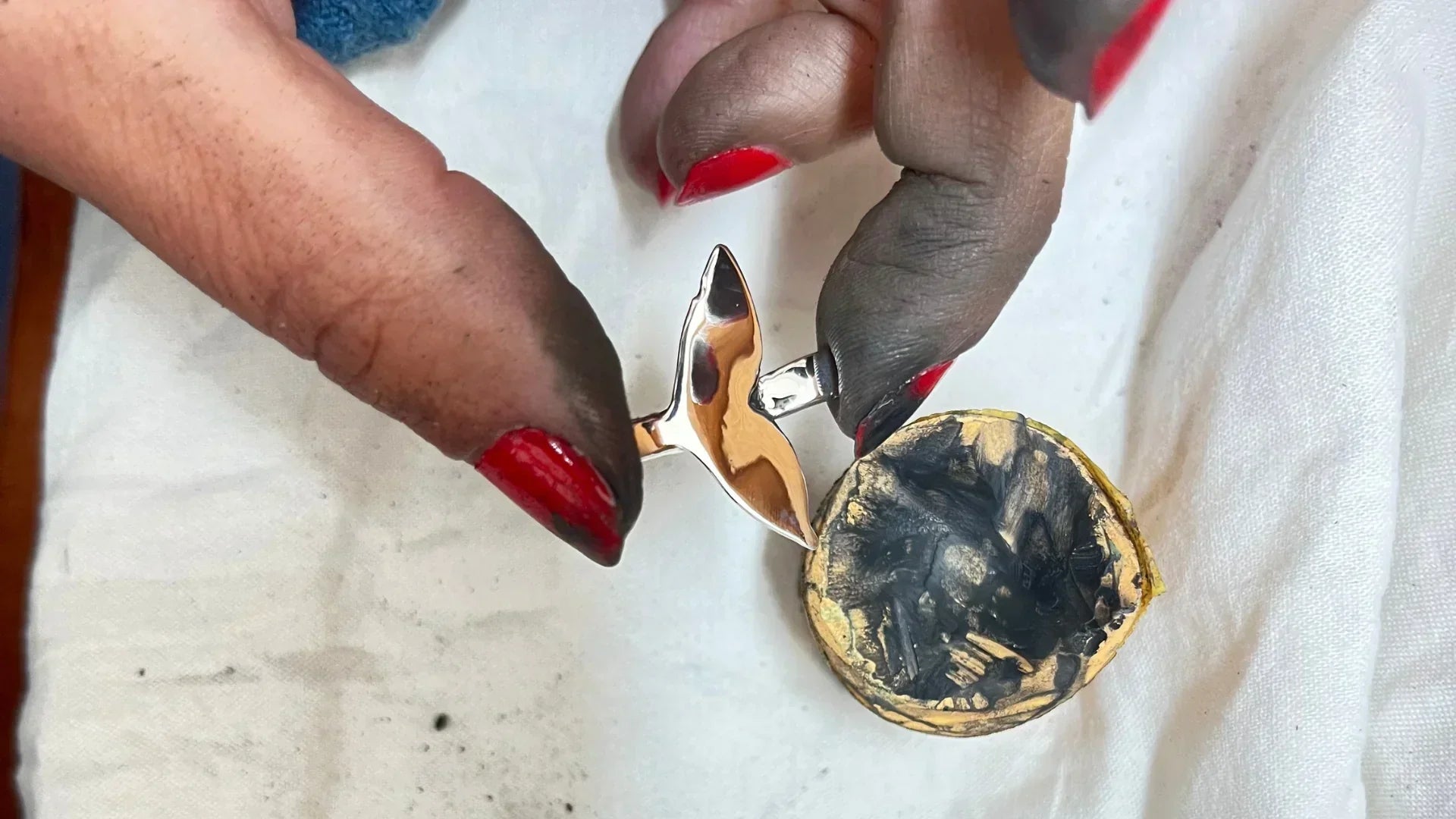
My hands bear burns left by the torch flame, scars etched by saw blades, calluses imprinted by the chisels on my palms. These are not hands from a catalog.
These are hands that work.
They know when the metal is ready to bend, when it still resists, when it has reached that precise point where it agrees to become something else. They can feel an imperfection of a few tenths of a millimeter under the thumb. It is this sensitivity that makes the difference. The ability to listen to the material with my fingers.
I have chosen not to use casting. Not because it is a bad technique, but because it is not mine. Every Honu piece of jewellery is shaped directly by hand, from the raw silver sheet to the finished piece. From the first stroke of the saw to the final pass of the polisher, the contact between my hands and the material is never interrupted. It’s a demanding choice, but it’s the one that suits me.
From metal to DNA

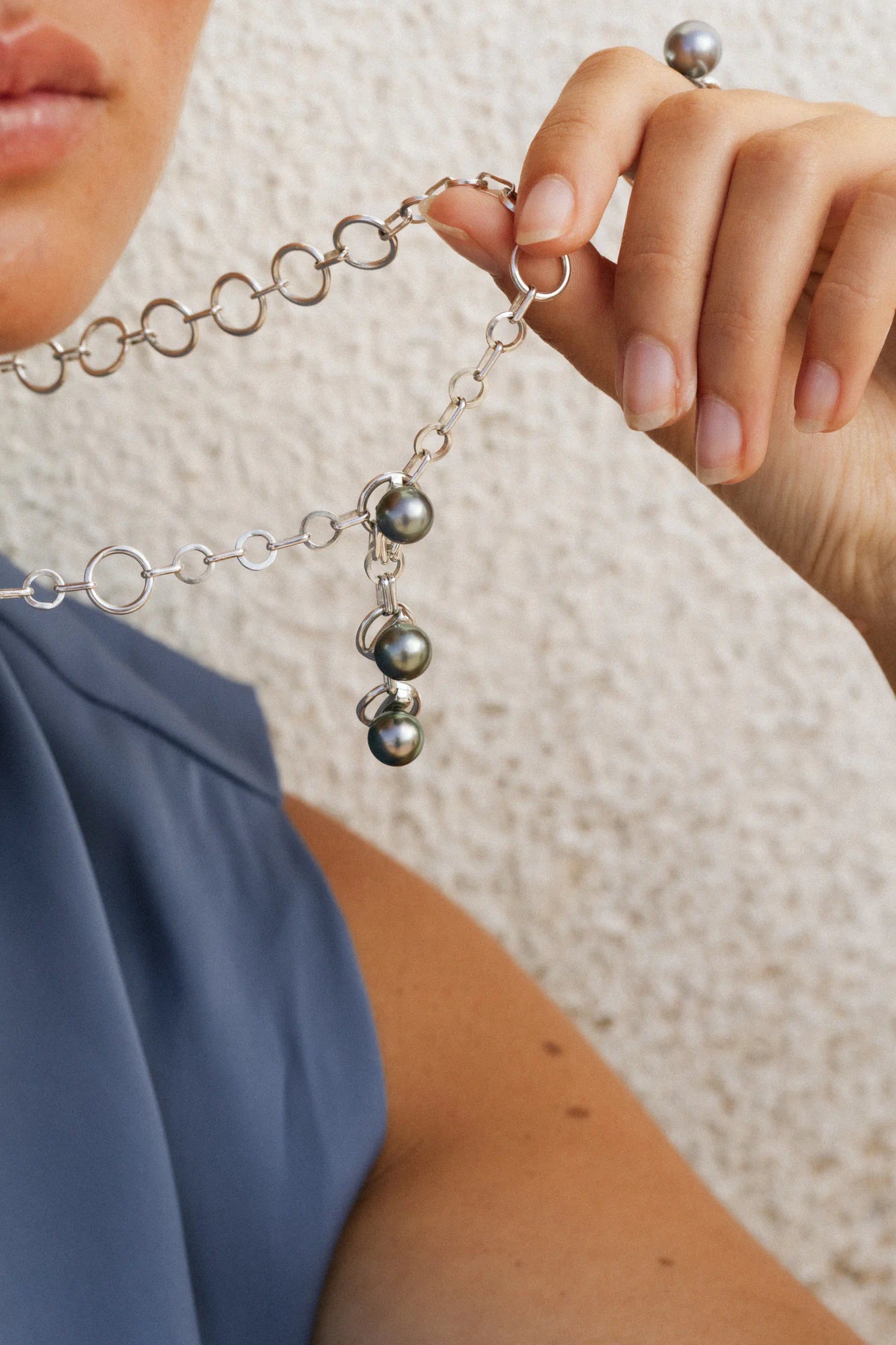
"More than a jewel, a DNA" takes on its full meaning here. What you wear on your finger or around your neck is the trace of a gesture, the imprint of a hand, the memory of a moment of creation. A DNA, in the literal sense of the word.
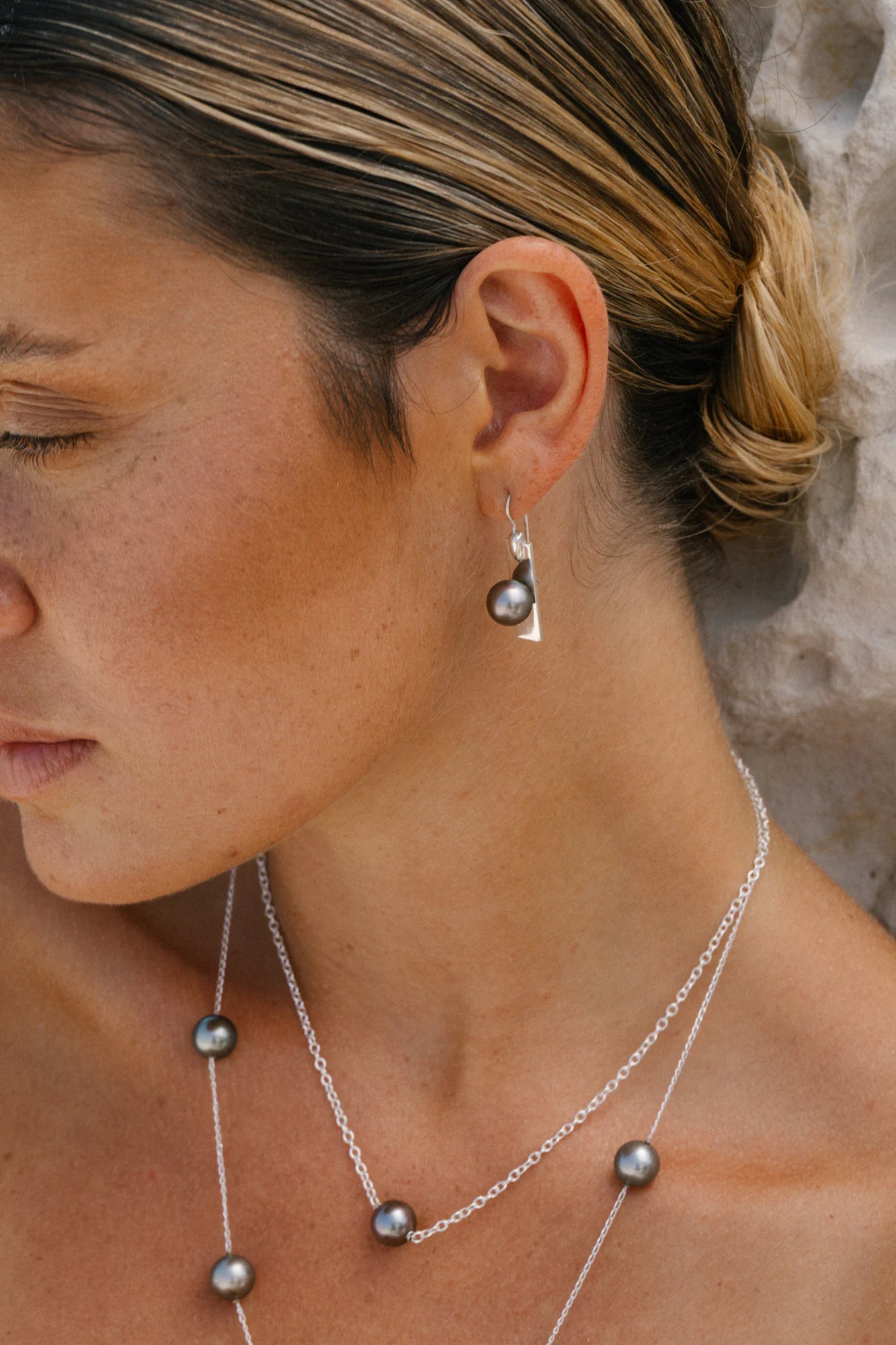
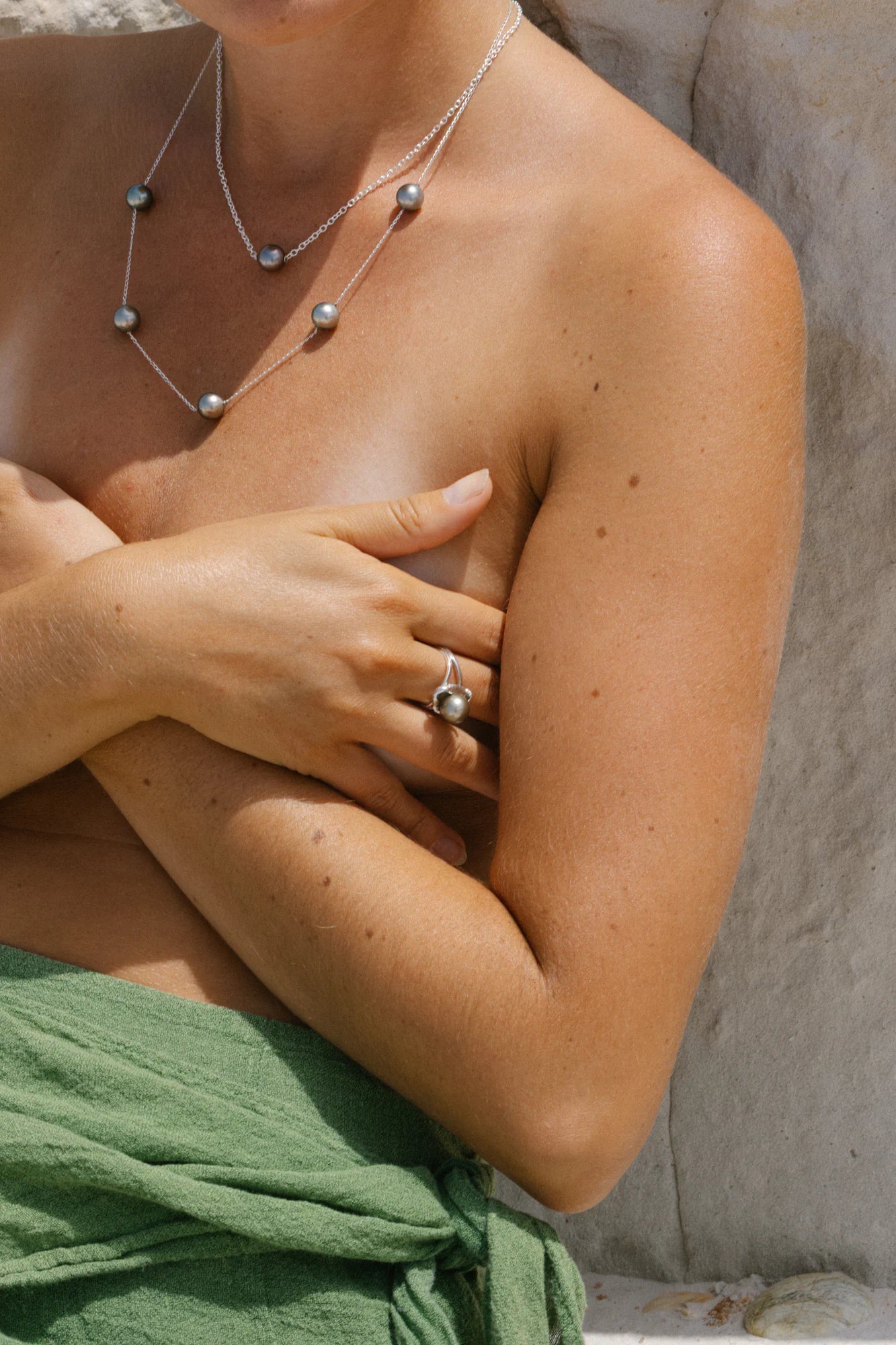
So the next time your hands grasp an object, turn a key, caress a face, or slip on a piece of jewelry, take a moment to look at them. They deserve your gratitude. They also deserve to be nurtured, cared for, and made beautiful. After all, a ring like the Alien Ring doesn’t just adorn a finger. It pays tribute to the hand that wears it.