Article: The white metal shaking up jewellery
The white metal shaking up jewellery
Why is solid silver making a strong comeback in jewellery? With its cool lustre and vibrant patina, this article shows how I transform this precious metal into a medium for art, balancing value and character.
Long relegated behind gold, solid silver is returning to jewellery with its volumes, its cool light and its character. At Honu Handmade Jewellery, it is a material of art.
Silver has always been present in workshops and the great houses. Yet for decades it was regarded as the secondary metal, the one chosen after gold. Silver jewellery was perceived as less serious than gold, simply because it was more accessible. Some women would even assert, with a kind of social self-evidence: 'I only wear gold.' A hierarchy of preciousness had taken hold in the collective mind.
Today, that perspective shifts , and so do desires. Silver is making a forceful comeback, upending ideals. It answers the desire for a dual-effect jewel, one capable of displaying both its value and its intent. It plays with skin, texture and light through bold pieces: imposing rings, striking pendants, clean chains, and delicate pieces alike. It asserts itself without restraint in art jewellery.
Tiffany & Co. is one of the most familiar examples. The American house built part of its history around solid silver and recalls having adopted the .925 standard as early as 1851. This choice shows that silver could already be regarded as a reference material, held to a clear standard of excellence. The creations of Elsa Peretti for Tiffany & Co. went on to prove this brilliantly. The Bone Cuff, with its enveloping form and its presence at the wrist, left its mark on modern jewellery. This cuff exists through its design, its balance, its relationship to the body, and the quiet force of silver. It has never needed to change metal in order to be precious. It is precious through its line, its presence, and the way it transforms the wrist. This kind of piece is a reminder that silver can carry luxury jewellery when it is worked with exacting intent.
Why silver is returning now
The return of silver accompanies an evolution in taste.
Precious jewellery has long been associated with the warmth of gold, with diamonds, and with the classic codes of prestige. That aesthetic retains its place, yet contemporary desire is broadening. Many women today seek jewellery that is more personal, more direct, less expected, with a genuine presence, a strong line, and a material that is as visible as it is felt. Silver answers this desire very well.
Its white light gives a clean, precise appearance. It works with every skin tone, every colour, natural materials, sober cuts, and pared-back silhouettes as well as freer, more relaxed outfits. It brings a genuine freshness.
Silver also lends itself to generous volumes. A ring can take on a greater presence on the hand, a pendant can become a true statement on the chest, and a bracelet can dress the wrist with amplitude. The metal affords greater freedom in design, texture and construction. In that freedom, silver reclaims its full modernity.
What silver truly brings to a piece
Silver first brings a particular light: white, cold, almost lunar. It traces the lines, sharpens the contrasts, and gives a piece its mineral presence. It is a pleasure to work with, save for when it reveals its firescale, but that is part of the craft and a subject well known among jewellers.
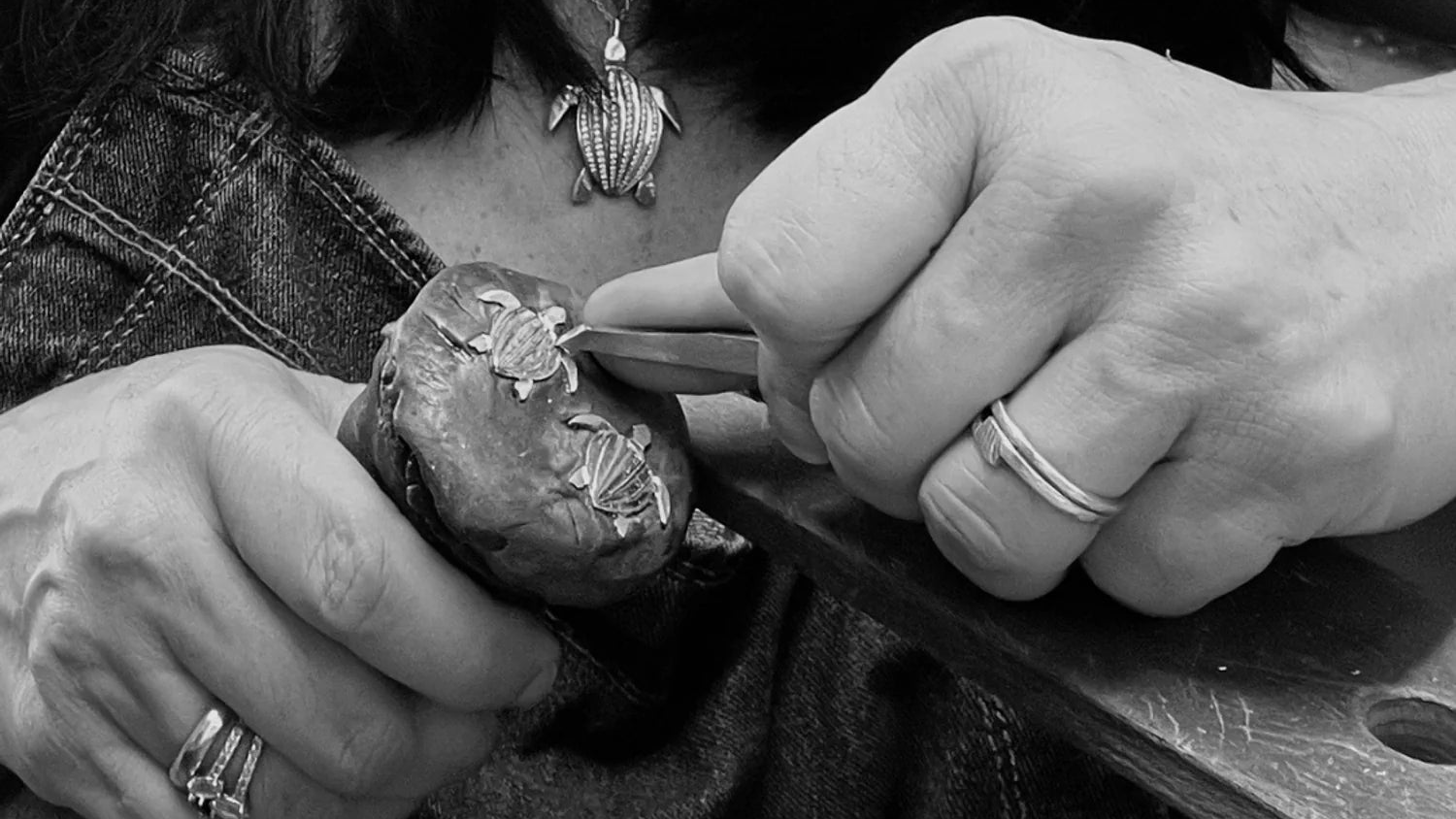
Solid silver is the primary material worked at Honu Handmade Jewellery. The Brut. Collection expresses the raw power of this metal, with its rough, organic textures reminiscent of an asteroid's surface.

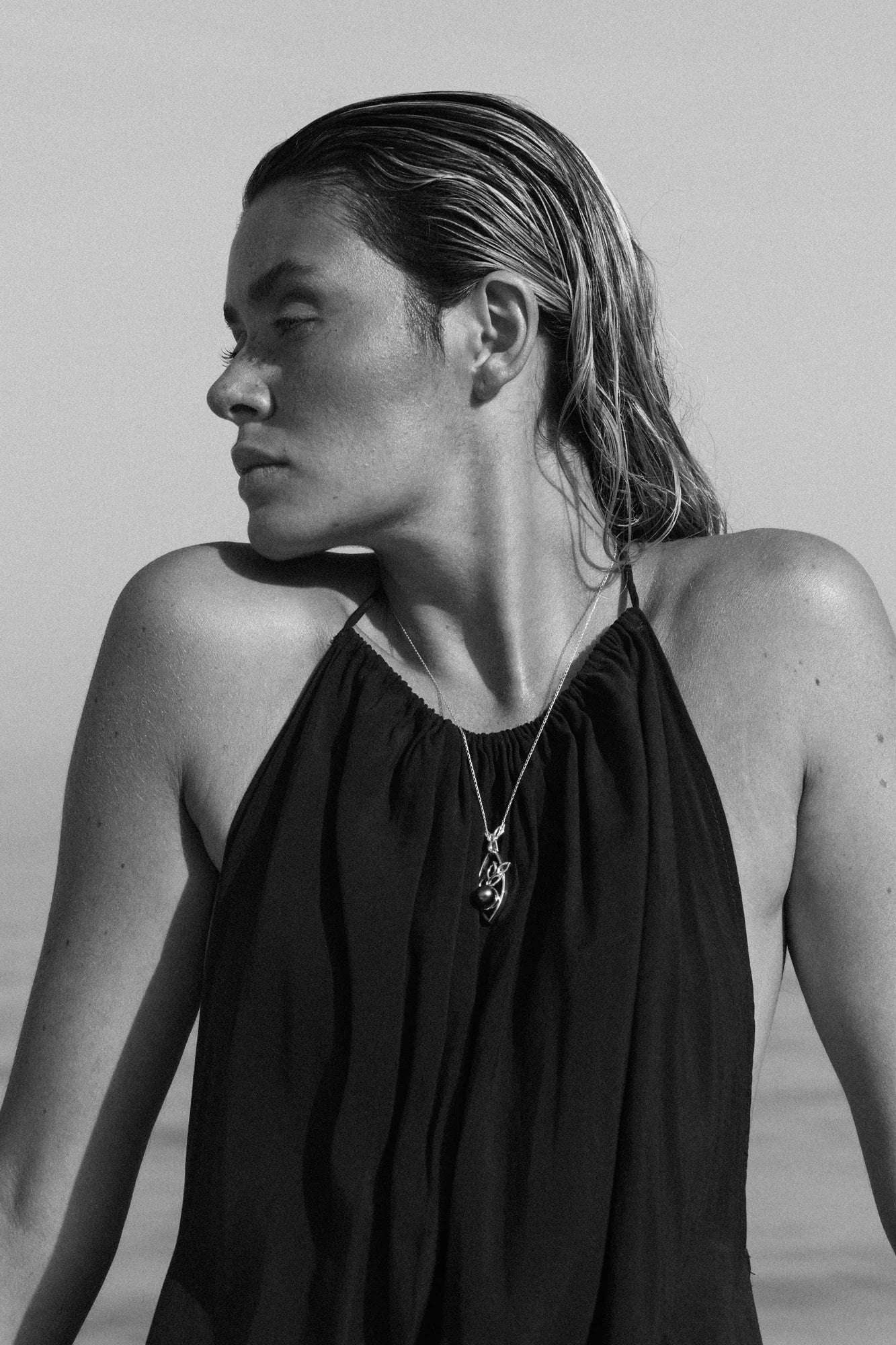
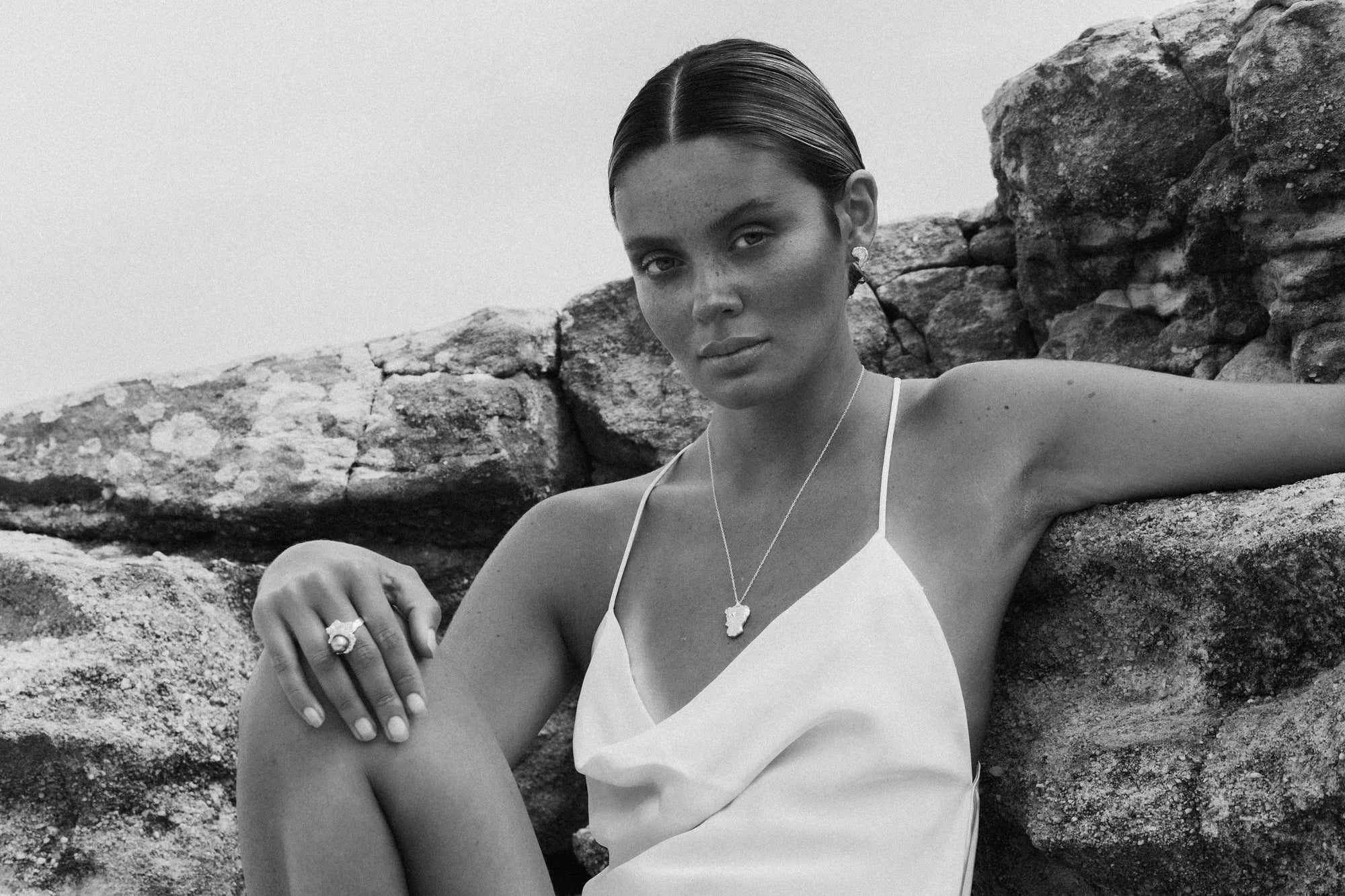
In the Origine ring, it gives the piece an organic density around the Tahitian pearl. In the Impact pendant, it carries a mineral force, with a surface that evokes a collision, the matter displaced and the energy locked within. In the Vaihau pendant, it becomes gadroons, texture, and shelter. In the Nui'i'a ring, it reveals its capacity to give a piece depth, with a roughness and presence that echoes the oyster shell.

These pieces show what silver makes possible when it is worked as a precious material in its own right. It gives the piece substance and speaks fully in the language of jewellery.
The white of silver and the Tahitian pearl
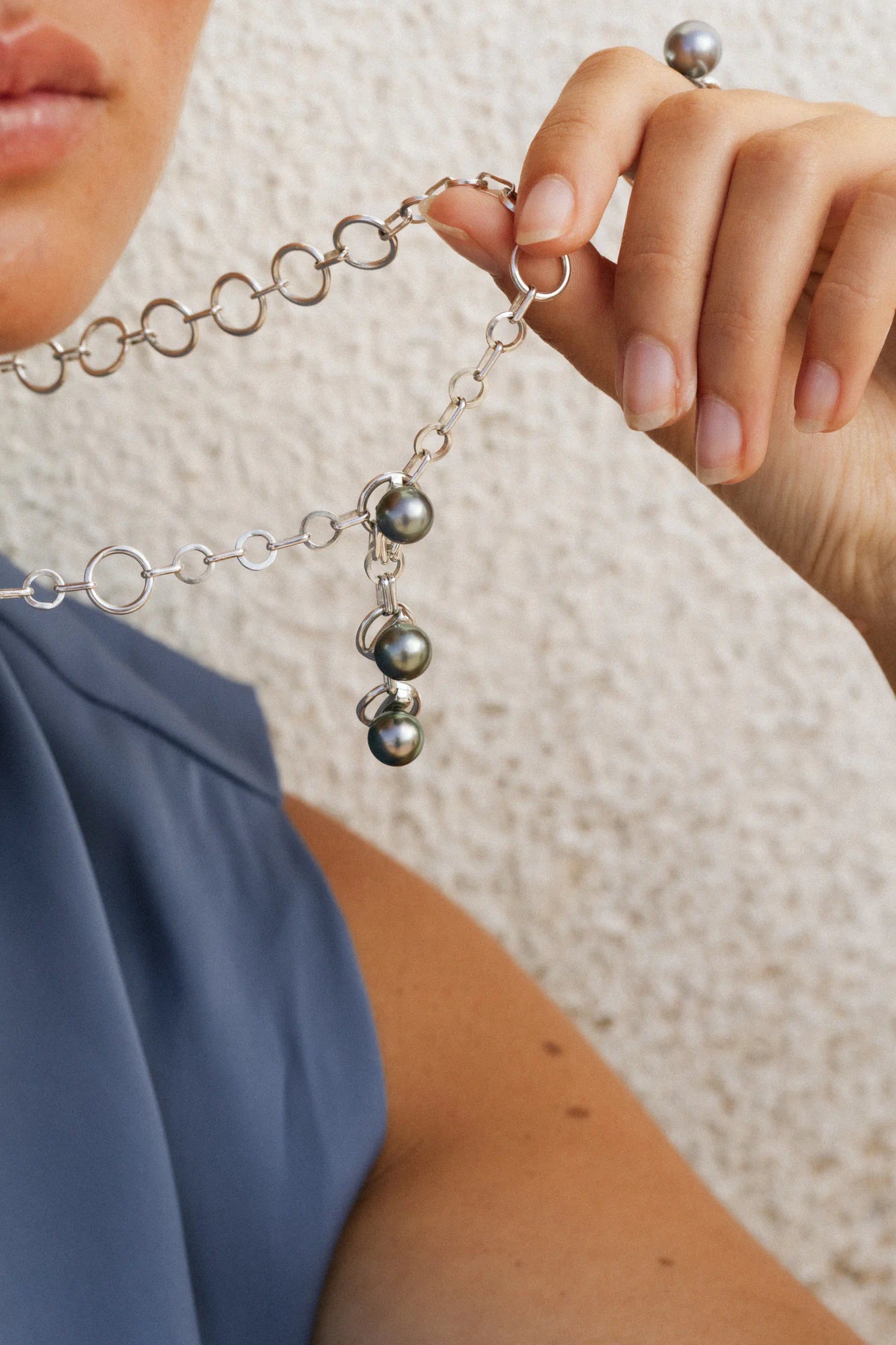
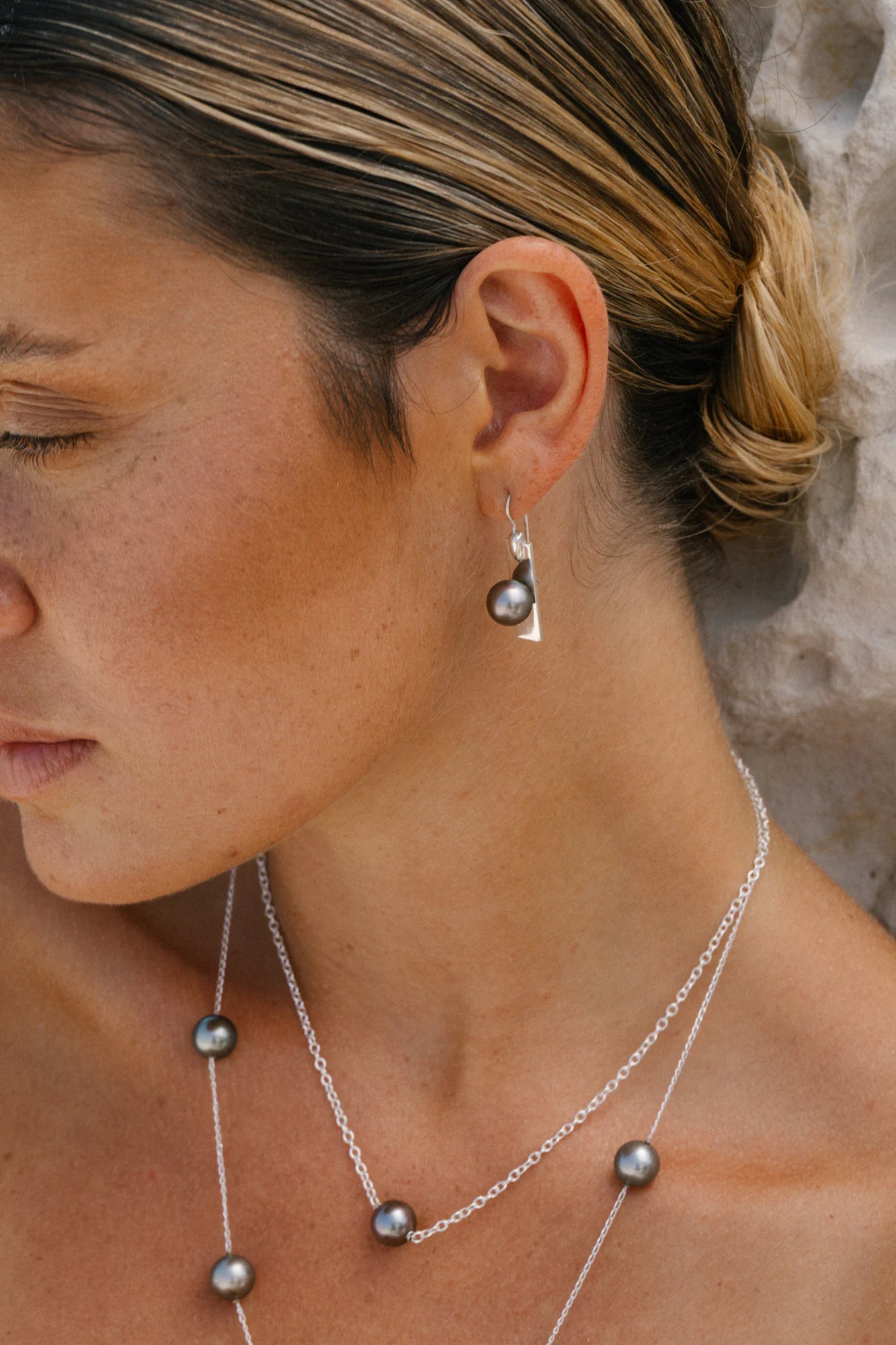
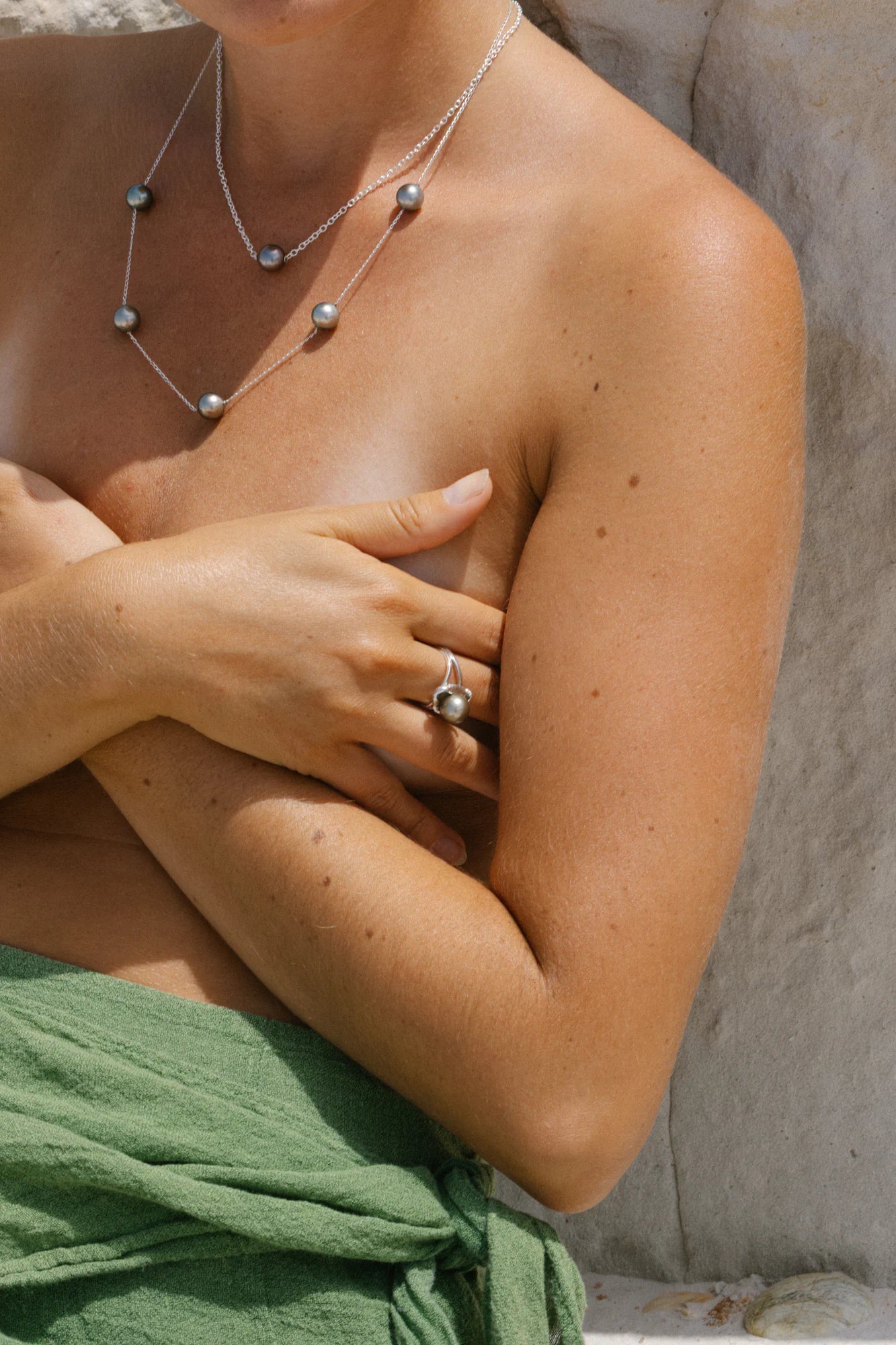
Silver speaks very naturally with the Tahitian pearl. A Tahitian pearl carries shifting overtones: grey, green, blue, aubergine, rose, at times almost metallic. The cool undertone of silver brings them to light.
I chose this pairing. Solid silver and the Tahitian pearl share a common presence. One is mineral, the other organic. Together, they build a balance between strength and softness, between relief and reflection, between matter worked by hand and matter born of life.

The perceived value of a work exceeds that of its materials
The value of a piece is never reducible to the materials from which it is made. Contemporary art has made this plain, and forcefully so. In November 2024, Comedian , Maurizio Cattelan's work comprising a banana taped to a wall with a strip of adhesive tape , was sold for $6.2 million at Sotheby's in New York. The materials cost a few cents. What is sold is the idea, the hand that placed it, the message it carries, and the renown of the artist who signs it.
This principle runs through the entire history of art. Andy Warhol's Brillo Boxes are worth millions, yet they are made of plywood and screen-printed paint. Jackson Pollock's drip paintings sell at auction for record sums, yet they rest on canvas and readily available pigments. Value is born elsewhere: in the work itself, in the signature that authenticates it, in the narrative it inscribes, in the rarity of the gesture, and in the artist's place within their era.
Jewellery follows the same rule. A piece derives its value from the finished object and from what it conveys: the design, the time of making, the rarity of the gesture, the artist's intention, the story it tells to the one who wears it. It is precisely for this reason that a silver piece can reach, and sometimes exceed, the value of a gold one. The material does not do everything. It sets a foundation. The work is built beyond it.
At Honu Handmade Jewellery, this principle guides every creation. Solid silver is a choice of noble, honest material, true to the identity of the house. But it is in the hand, the time, and the signature that a piece finds its full value. What those who choose Honu will wear is a work of art.
925 silver and 950 silver: what the fineness changes
In my workshop, 950 silver is favoured. This choice reflects a deliberate pursuit: a higher fine silver content, a brighter, whiter light, a material closer to its most noble state.
925 silver remains relevant for certain technical elements or wearability constraints. The right choice always depends on the piece, its structure, and its intended use. To understand this distinction in detail, I invite you to read our dedicated article on the durability of solid silver.
Patina is part of silver's life
Patina is part of silver's natural life, yet it is often misunderstood and dismissed. Silver can darken on contact with certain compounds present in the air and environment, particularly sulphur compounds. This reaction forms a fine layer of silver sulphide on the surface. Moisture, pollution, perfumes, cosmetics, perspiration, skin pH, certain fabrics, or open-air storage can all accelerate the process. Two people can therefore wear the same piece and observe an entirely different evolution.
This patina shows that silver reacts. A piece of solid silver jewellery can be cleaned, revived, and repolished. Its surface evolves, while the material itself remains intact throughout. This is one of the great advantages of solid silver: it journeys through time.
A few simple steps help slow this process: avoid applying perfume directly onto the piece, remove it before contact with household products, swimming pools, or the sea, wipe it with a soft cloth after wearing, then store it in a sealed pouch, away from moisture. For further guidance, see our three simple steps for caring for a silver piece every day.
Silver: a precious metal and investment asset
Silver is also experiencing renewed interest beyond jewellery. It belongs to the family of listed precious metals. It is traded on the markets, available in the form of ingots, coins, and bars, and commands growing investment demand in certain countries. The official price is tracked by the London Bullion Market Association (LBMA), the reference body for the precious metals industry.
In India, demand has been particularly strong. Silver imports reached record levels in the fiscal year ending March 2026, driven in part by investor appetite and silver ETFs. The Silver Institute, an international trade body, tracks these developments in its annual publications. This dynamic confirms that silver is now regarded as a reserve and investment metal, alongside its industrial and jewellery applications.
In a piece of jewellery, this economic dimension adds to the value of creation. A jewellery piece brings together a metal, a design, a craft, a making time, a rarity, and a hand. This is precisely what makes silver so compelling in art jewellery. It holds genuine material value and allows great creative freedom.
White metal reclaims its place
At Honu Handmade Jewellery, 950‰ solid silver is a choice. It enables this jewellery of material, hand, and character. It gives each piece a quiet strength and density felt immediately upon wearing. Discover our solid silver works from the Brut. Collection and our Identity and Materials Booklet, which documents the origin and composition of each piece.