
Article: How to care for your silver jewellery on a daily basis?
How to care for your silver jewellery on a daily basis?
To preserve the brightness of solid silver, wipe your jewel after each wear, avoid perfume, chlorine, and household products, then store it away from air and humidity. These simple habits limit oxidation while allowing the patina to evolve with elegance.
Solid silver: a metal that lives with you
Solid silver isn’t an inert metal that you tuck away in a drawer and forget about. It’s a living metal that reacts to the air, your skin and your everyday life.
Why do we talk about ‘living silver’?
Technical note: silver is a metal of mineral origin and is not, in the strict biological sense, a living being. However, it is described as ‘living’ in traditional jewellery terminology to reflect its constant reactivity: it oxidises and develops a patina on contact with the air, skin, moisture and sulphur-based products, evolving in a unique way for each piece and for each wearer. This evolution is the hallmark of a pure metal that interacts with its environment. Regular polishing allows its lustre to be restored as often as one wishes.
This term is well-established in the jewellery trade, which refers to the ‘moods’ of the metal, particularly the fire spots that appear when heated over a flame. It should not be confused with the historical term ‘vif-argent’, which referred to mercury in ancient chemistry.
And that is precisely what makes it so precious.
Unlike plated jewellery, which eventually wears away and loses its finish, solid silver develops a patina. This natural patina (that slight sheen that appears over time) is the hallmark of an authentic piece of jewellery, proof that it has a history.
But if you’d prefer to preserve the brilliant shine of your early days together, a few simple steps are all it takes. Steps that quickly become rituals, a way of looking after what matters to you.

Understanding what’s happening
In reality, solid silver does not oxidise; as mentioned above, it develops a patina. This is a natural chemical reaction: the metal reacts with the sulphur present in the air, on your skin and in the environment. This is what creates that dark colour, sometimes referred to as ‘tarnish’ or, colloquially, ‘oxidation’.
At Honu, I believe that a handcrafted jewel should live against your skin and with you.
Its chemical reaction (i.e. the patina) is part of this shared life. But it can be controlled and slowed down according to your preferences.
The steps that make all the difference
Wipe your jewellery down at the end of each day
The simplest step is also the most effective. At the end of the day, take thirty seconds to wipe your jewellery with a soft cloth (microfibre or cotton).
This removes what has built up during the day: traces of skin, sebum, invisible residues of cream or perfume, and particles of pollution. All of which, when accumulated day after day, accelerate ‘oxidation’.
It’s a little ritual. A way of saying to your jewellery: thank you for today. And in return, it retains its lustre for longer.
Store it carefully
The air accelerates ‘oxidation’. When you’re not wearing your jewellery, give it a safe place to keep it:
- A soft fabric pouch (the case supplied with every Honu piece, for example)
- A velvet-lined jewellery box
- A sachet containing an anti-tarnish tablet for long periods of non-use
And above all: never store several pieces of jewellery together without protection. Silver is a soft metal. It gets scratched when it comes into contact with other pieces, stones or clasps.
Ultimately, it’s a form of respect. You’re telling each piece of jewellery: you have your own place, you’re important.
Put jewellery on last, take it off first
Perfume, cream, hairspray, make-up: all these products contain substances that can cause a chemical reaction with silver – such as alcohol, acids and corrosive agents.
The rule is simple: get fully ready, wait until everything is dry, and only then put on your jewellery. And in the evening, it’s the other way round: take off your jewellery first, before your shower, before removing your make-up.
It’s also a way of giving it pride of place in your routine. The last thing you do before going out, the first thing you do when you get home.
Wear it regularly
It’s counter-intuitive, but it’s true: jewellery that’s worn develops a patina more slowly than jewellery left forgotten in a drawer.
Contact with your skin creates a gentle, natural polish. Your body’s oils help maintain the metal. A piece of jewellery that lives with you stays more beautiful than one left waiting in the shadows.
If you have several pieces of jewellery in silver, rotate them. Make sure none of them goes too long without being worn or cherished.
A thorough clean from time to time
For regular care, a pre-moistened chamois cloth (a special silver-cleaning cloth, available from Jewellery) is your best friend. It only takes a few seconds to restore your jewellery’s shine.
For a more thorough clean, about once a month:
- Use a soft cloth slightly dampened with lukewarm water
- Gently wipe the entire surface of the jewellery
- Dry it immediately and thoroughly with a dry cloth
- Finish by polishing with a chamois cloth
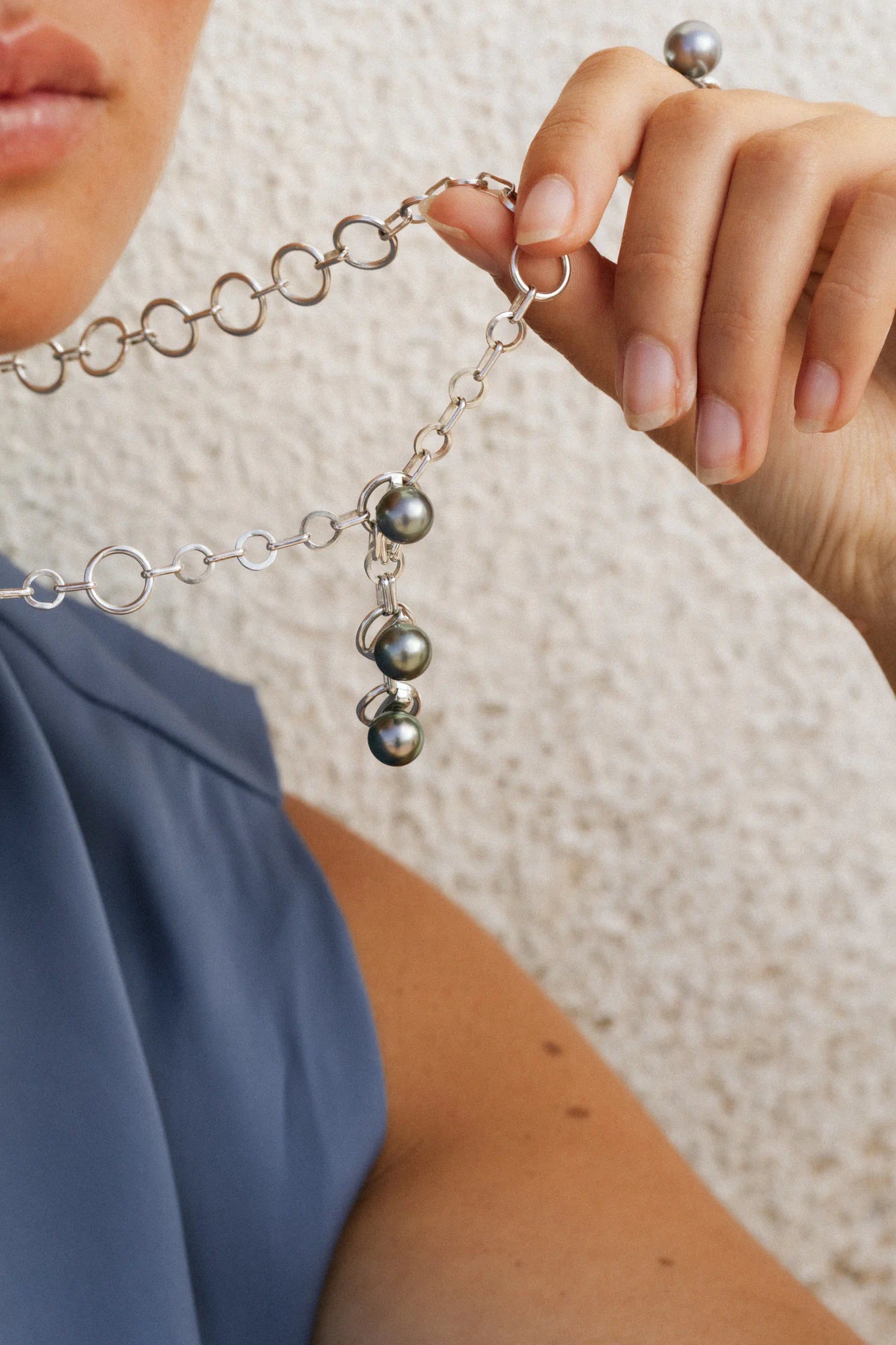
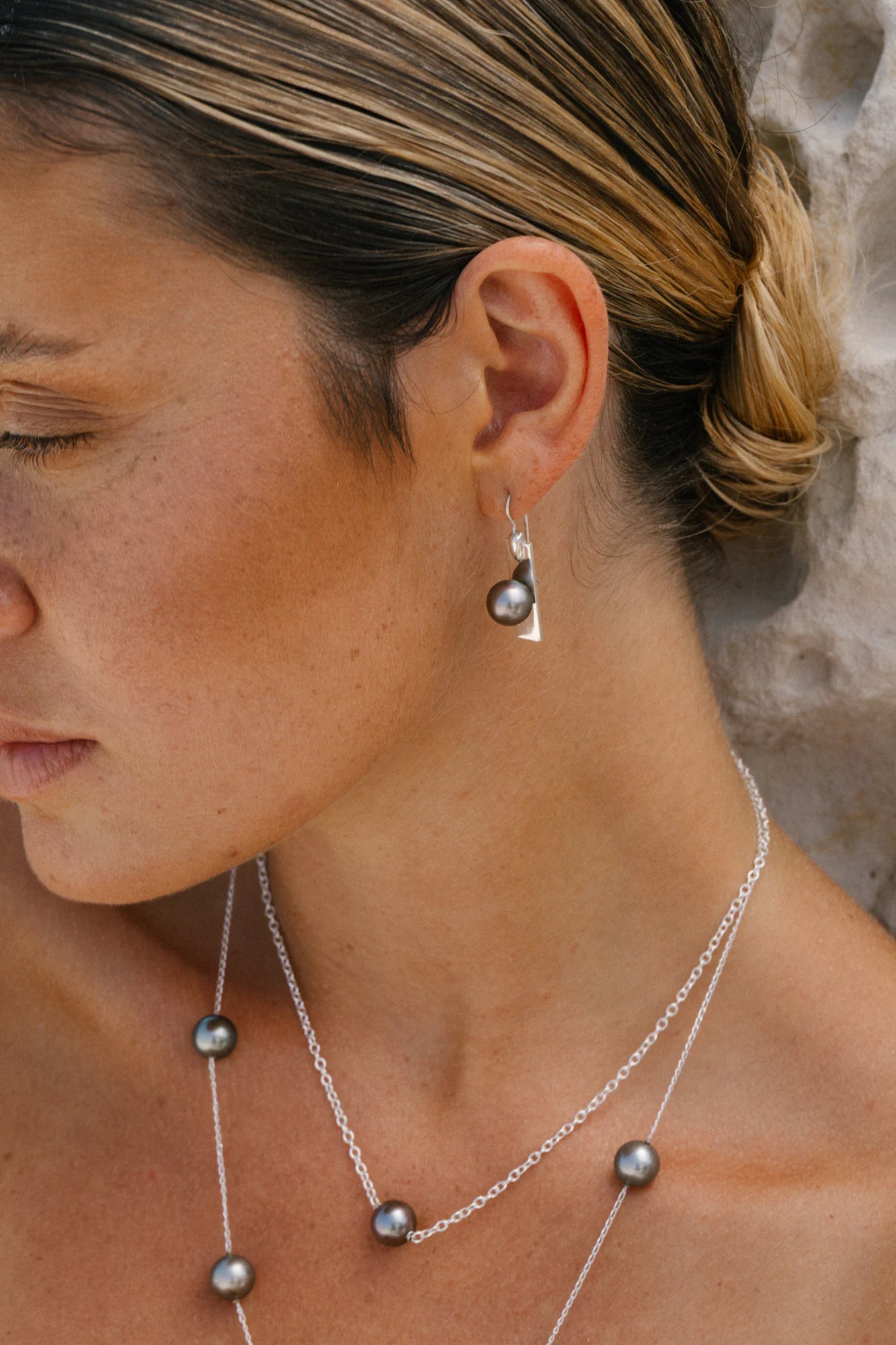
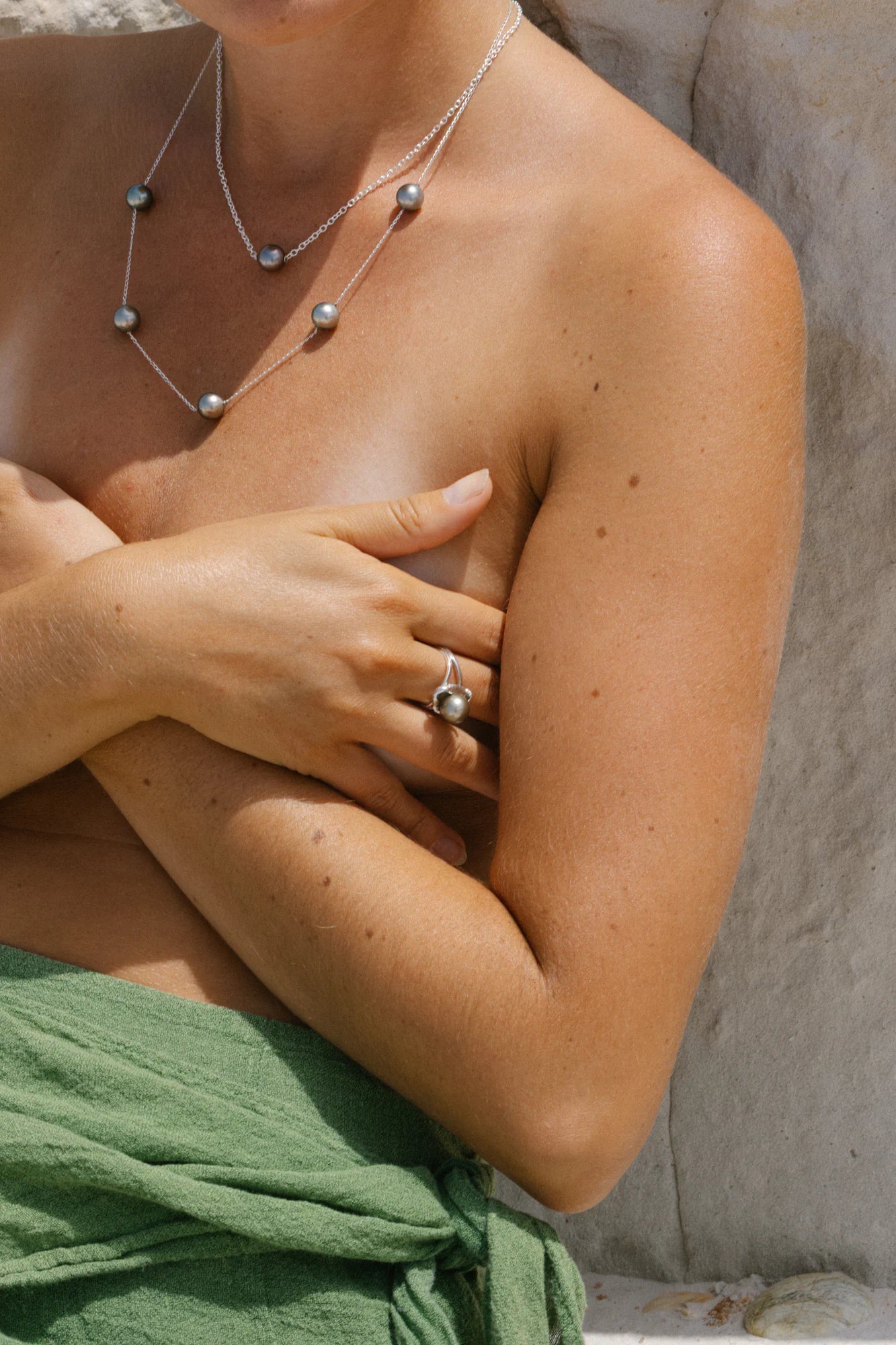
Please note: if your jewellery features a Tahitian pearl, never immerse it in a specialised metal cleaner and avoid using any cleaning products at all. Please refer to our Tahitian pearl care guide for specific precautions.
If your jewellery has turned black
Don’t panic. This tarnish on silver is completely reversible. This is the key difference compared to plated jewellery: once plated jewellery wears away, it’s ruined. It will need to be stripped and re-plated by a Jewellery specialist.
A piece of solid silver jewellery that has tarnished can always regain its original lustre, as the structure of the silver itself remains unaffected.
For light tarnish, a dampened chamois cloth (those special silver-cleaning cloths found in Jewellery shops) works wonders in a matter of seconds. This is the safest and most effective method.
For more severe cases or heavily ‘oxidised’ jewellery, I advise you to consult a professional jeweller. They have the appropriate equipment (polishing, ultrasonic cleaning) that won’t damage the handcrafted finishes of your jewellery. Avoid ‘home remedies’ using bicarbonate of soda or vinegar: they can leave residues that damage the hand-crafted textures.
Solid silver: a choice for life
A piece of solid silver jewellery, if well looked after, can be passed down through the generations. It is the metal of family heirlooms, of pieces we pass on, of memories we cherish.
That’s why at Honu, all my jewellery is made from solid silver. An investment in longevity and quality.
A piece of jewellery is a companion on life’s journey that we take care of.
Discover our solid silver creations:
→ Rings Collection | → Bracelets Collection | → Pendants
See also: How to care for your Tahitian pearl: if your jewellery features a pearl, you’ll find this guide invaluable.