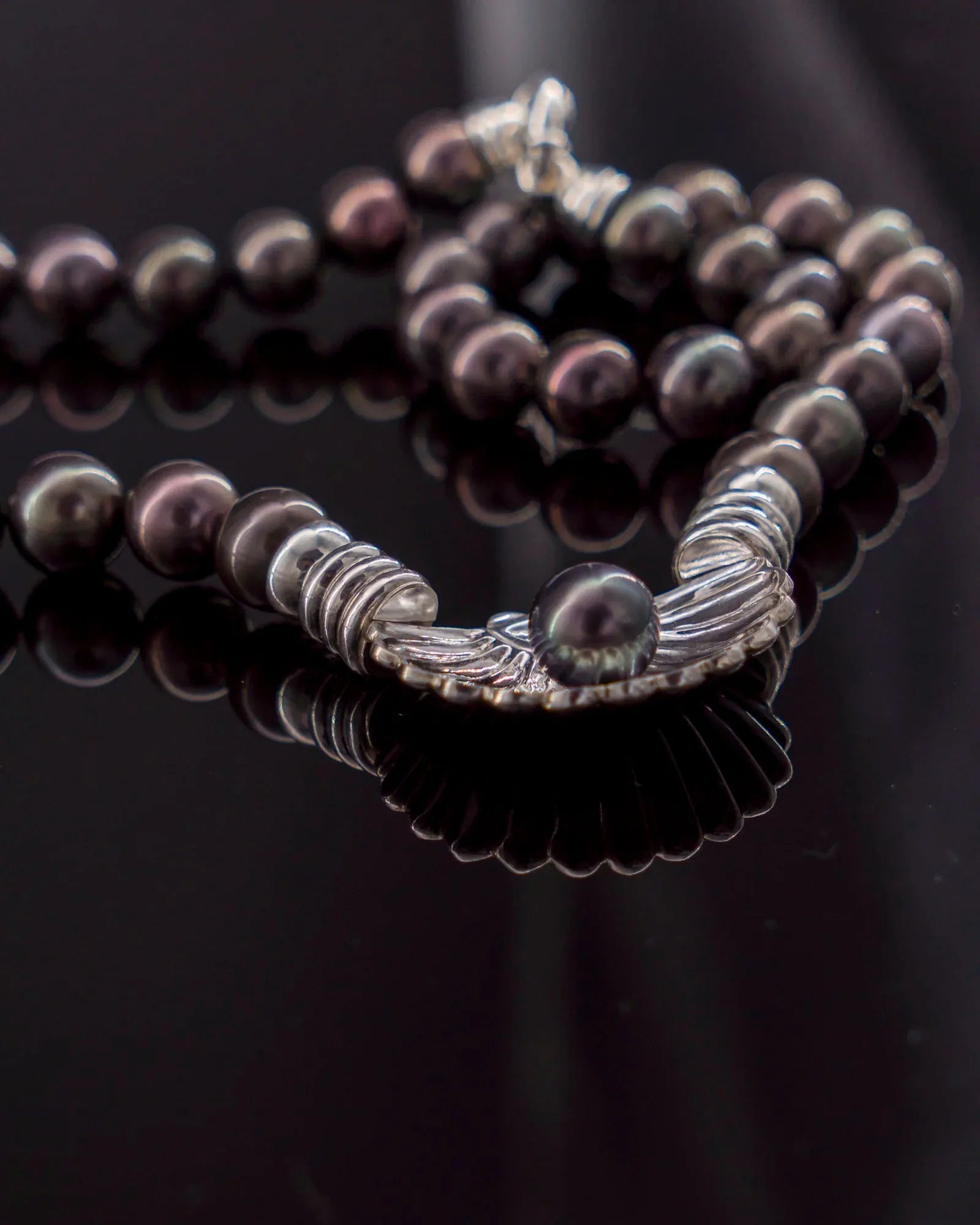
Article: How to identify solid silver?
How to identify solid silver?
To identify solid silver, look for the 925, 950, or 999 hallmark engraved on the piece. Without a hallmark, test with a magnet: pure silver is not magnetic. Sterling silver 925 contains 92.5% pure silver, while 950 silver contains 95%. The hallmark remains the most reliable way to recognize genuine silver.
How can you recognise authentic sterling silver jewellery?
With the rise of online shopping and the proliferation of offers, counterfeit or lower-quality jewellery is unfortunately becoming increasingly common. You can find everything on the internet: real, fake, and everything in between. Knowing how to distinguish authentic solid silver jewellery is essential for investing with peace of mind. Because buying jewellery, especially jewellery that you plan to wear for years to come, is not a trivial matter.

Official hallmarks for solid silver
The hallmark is the first thing to look for on a piece of solid silver jewellery. It is an official mark affixed by an approved body that certifies the metal's fineness. Each country has its own system.
The 925 hallmark, international standard
925 silver is the international standard. It contains 92.5% pure silver and 7.5% other metals, usually copper. This is what you will find in most jewellery shops, it is legally recognised, and it has an official hallmark in almost every country in the world.
950 silver, a higher standard with the same hallmark
950 silver contains 95% pure silver. It is a higher, purer grade. At Honu, this is the grade I prefer to use for my creations, as it allows for finer craftsmanship. The malleability of this metal offers more possibilities when forging. Each hammer blow can be more precise, more nuanced. However, although it contains more pure silver than 925 silver, the 950 standard is not one of the official hallmarks. By legal default, it is therefore marked with the 925 hallmark. This is an administrative issue, not a question of quality.
Fine silver, also known as 999 silver, is mainly used as an ornament on jewellery, never as the main material. Its pure silver content is 99.9%. It is an extremely soft and malleable metal. If you were to make an entire ring out of it, deformation would be inevitable within the first week of wear.
Hallmarks by country
| Country | 925 Silver Hallmark | Symbol | Organisation | Mandatory |
|---|---|---|---|---|
| France | Minerva 1st title | Helmeted head of Minerva in an octagon, number "1" | DGDDI | Yes, above 30g |
| Portugal | Marca de Contrastaria | Rabbit's head turned to the left (since 2021) | Contrastaria / INCM | Yes, above 2g |
| United Kingdom | Lion walking | Lion walking, right front paw raised | Assay Offices | Yes (Hallmarking Act 1973) |
| Italy | Manufacturer's mark | Elongated hexagon with 5-pointed star + province code, accompanied by an oval "925" | MISE | Manufacturer's mark obl., voluntary hallmark |
External link: The official poster of the Portuguese Assay Office with all current marks can be viewed here: Official marks, Assay Office 2024.
In my workshop, every piece goes through the Portuguese Assay Office. It is one of the most rigorous assay offices in Europe. The resulting hallmark is a certification that the metal has been analysed and validated. It is not a formality, it is proof.
Note: the "925" hallmark engraved alone on a piece of jewellery is not always an official guarantee. In France, Portugal and the United Kingdom, only the state hallmark (affixed by an approved body) truly certifies the metal's fineness. A manufacturer may engrave "925" on its own initiative, but this does not replace the certification of a hallmarking office.
6 tests to recognise solid silver at home
Test 1: the hallmark
Look for the mandatory hallmarks. For solid silver, this is usually the number "925" or the official hallmark affixed by an approved body in the country where the jewellery was manufactured and then authenticated. This hallmark is engraved somewhere on the jewellery, often on the inside of rings or pendants. You may need to use a magnifying glass to see it clearly.
Test 2: Weight and density
Weight is one indicator. Solid silver is dense. If a piece of jewellery feels light, too light for its size, it is suspicious. Silver-plated jewellery weighs much less than solid silver jewellery of the same appearance.
Test 3, temperature to the touch
Solid silver conducts heat very well. Hold the piece of jewellery in your hand: it should warm up quickly on contact with your skin. A piece of jewellery made of base metal or plastic will remain cold for longer. This is not a definitive test, but when combined with the others, it helps to give you an idea.
Test 4: shine and natural patina
Visually, solid silver has a distinctive shine that reflects its preciousness. But be careful: some high-quality imitations can also have a deceptive shine. This test alone is therefore never sufficient.
Unlike plated or silver-plated jewellery, whose surface deteriorates quickly over time, genuine solid silver develops a natural patina that gives it a unique tone. This patina is not a sign of deterioration. It is a sign of evolution. You can clean it if you wish, or keep it as a mark of time.
Test 5: the magnet test
Solid silver is not magnetic. Hold a magnet close to the jewellery: if it is attracted, it is not pure silver. Be careful, however: some non-magnetic metals (such as copper or brass) are also not attracted to magnets. This test can eliminate the most obvious fakes, but not all of them.
Test 6: professional verification
You can have it tested by a professional or at a hallmark office. Furthermore, the tooth test, which is used to verify the authenticity of pearls or gold, cannot be applied to silver.
How to recognise solid silver without a visible hallmark
Sometimes, solid silver jewellery does not have a visible hallmark. Antique pieces, handmade jewellery from certain countries, or very small pieces may not have one. In France, for example, pieces weighing less than 30g do not require a state hallmark.
In this case, combine several of the tests described above: weight, patina, temperature, magnet. If you are still unsure, consult a jeweller or a hallmarking office, which can perform an X-ray fluorescence test (a non-destructive method that identifies the exact composition of the metal).
My recommendation is always to ask for a certificate of authenticity at the time of purchase. At Honu, each piece comes with documentation detailing the metal's fineness.
Why it is important to verify authenticity
At Honu, each piece is made with noble, precious and authentic materials. This is a promise of exceptional quality and transparency.
Verifying the authenticity of the materials used in your jewellery is important to avoid making a mistake.
A Certificate of Authenticity is provided with each piece of jewellery: genuine documentation detailing the metal content.

Frequently Asked Questions
Look for the "925" hallmark engraved on the jewellery, usually on the inside. Check the weight (solid silver is dense) and observe the natural shine that seems to come from within the metal.
925 silver contains 92.5% pure silver (international standard), while 950 silver contains 95%. 950 silver is more noble and allows for finer craftsmanship, but legally it also bears the 925 hallmark because this grade does not have a dedicated official hallmark.
Yes, this is normal and even a sign of authenticity. Solid silver develops a natural patina when it comes into contact with air and skin. This "oxidation" does not damage the jewellery: you can clean it or keep it as a mark of time.
Use a magnifying glass to look for the hallmark in hidden areas. Check the weight (solid silver is heavier than plated silver) and see if the jewellery develops a natural patina over time. Have it appraised by a professional (jeweller or hallmarking office).