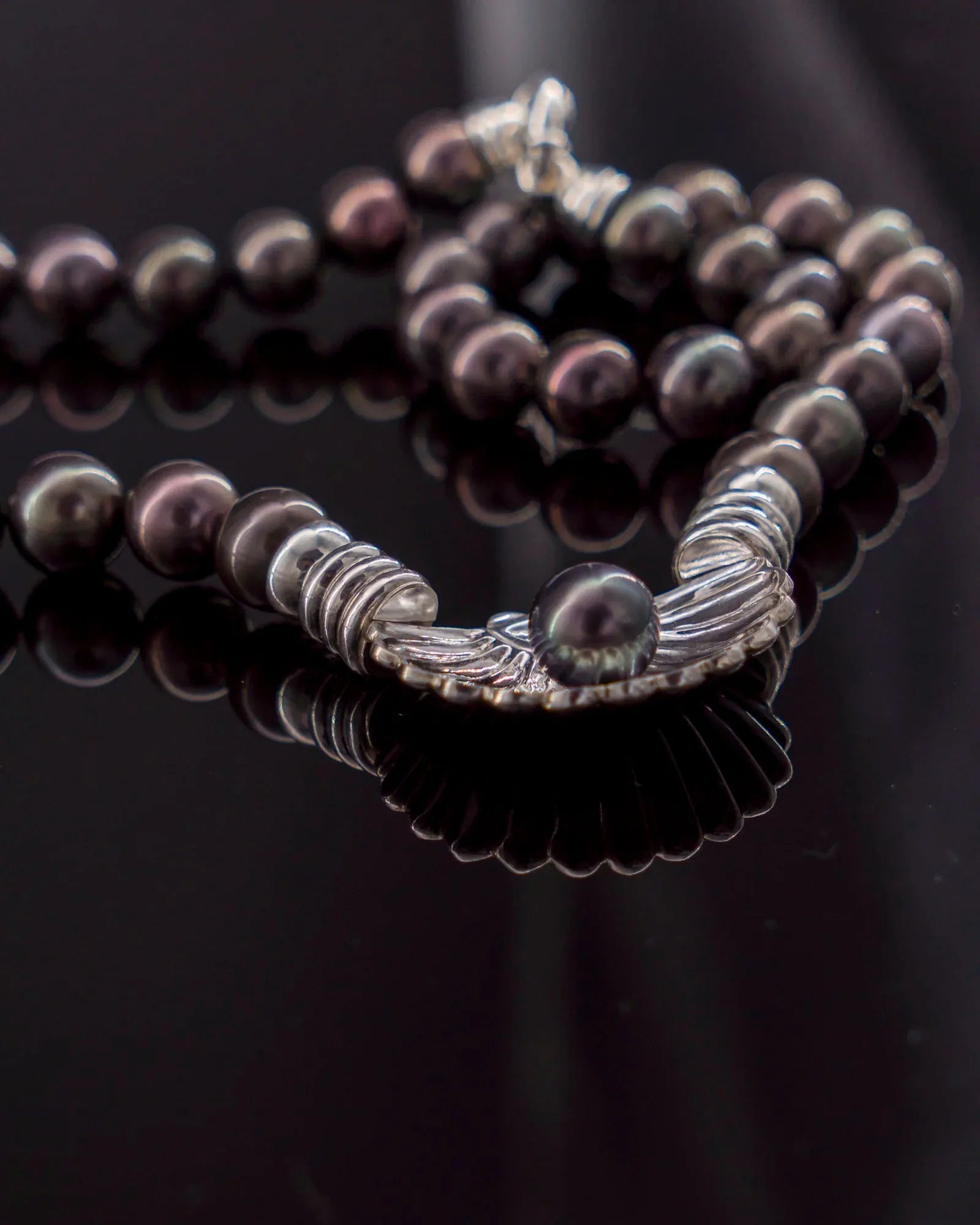
Article: How to care for your Tahitian Pearl?
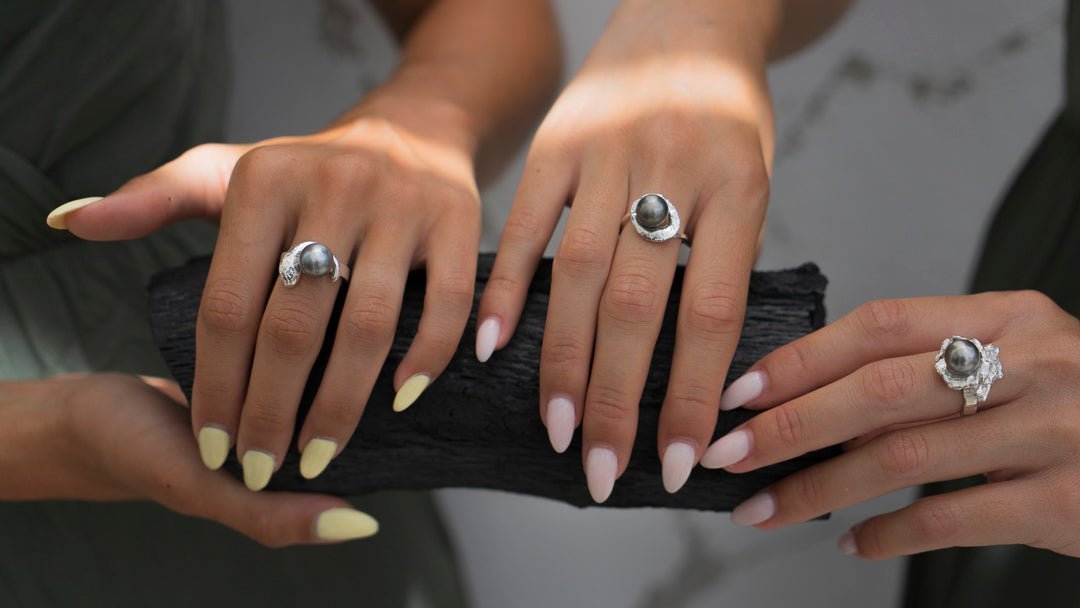
How to care for your Tahitian Pearl?
To care for a Tahitian pearl, wipe it with a soft cloth after each wear. Avoid all contact with perfumes, creams, and chemicals. Store it separately from other jewelry to prevent scratches. The Tahitian pearl is organic: it needs minimal humidity. Regular care preserves its natural luster.
A living gem that needs you
The Tahitian pearl is not like other jewels. It is not glass. It is not ceramic. It is a living thing that has grown over many years in an oyster at the bottom of a Polynesian Lagon. It has taken time to become what it is. It breathes, reacts, and evolves.
Why do we speak of a "living pearl"?
Technical note: the Tahitian pearl is not a living organism in the strict biological sense (it has no active metabolism once formed). However, it is described as "living" in traditional jewellery vocabulary because its organic matter remains reactive: it evolves with its environment, it is nourished by contact with the skin, which rehydrates its matrix, and it can permanently lose its lustre if not worn and cared for. Jewellers even speak of a "dead" pearl when its lustre has faded irreversibly.
This terminology is established by Tahitian pearl farmers, by the great international jewellery houses (Mikimoto, Tasaki, Wan Pearls), and recognised by the reference bodies GIA (Gemological Institute of America) and CIBJO (World Jewellery Confederation), which classify pearls as organic gems as opposed to mineral gems.
And above all, it needs you.
Perhaps that is what makes it so precious. A Tahitian pearl is a companion that ages with you, adapts to your skin, and bears the traces of your days. Taking care of it is like saying: you matter to me and I respect you.

Understanding what you wear
Before talking about care, let's take a moment to understand what a pearl really is.
Its surface is made of mother-of-pearl (microscopic layers of aragonite, a calcium carbonate crystal, deposited one by one by the oyster). This is what gives it its unique luster, its reflections that change with the light, that famous orient that connoisseurs seek.
But this beauty comes at a price: mother-of-pearl is sensitive. Not fragile in the sense that it breaks easily, but rather sensitive in the sense that it deserves respect. It reacts to acidity, chemicals, and dryness.
This is why a well-loved pearl retains its luster for decades, while a neglected pearl can tarnish or even die within a few years.
The actions that make a difference
Wear it often.
It may seem strange, but it's true: a pearl that is worn ages better than a pearl that is forgotten in a jewellery box.
Contact with your skin provides the natural moisture it needs. Your body's oils nourish the nacre and preserve its luster. A pearl that has been locked away for years can dry out, lose its luster, and die.
The most beautiful pearls I have ever seen were those that had been worn, loved, and passed down. That, ultimately, is what a Tahitian pearl is: a jewel that blossoms when worn.
Wipe it down every evening
At the end of the day, take thirty seconds to care for it. Use a soft cloth (microfiber or cotton) and a gentle touch. Remove the traces of the day: sweat, invisible residues of cream or perfume, and particles of pollution.
It's a little ritual. A way of saying to your pearl: thank you for today, I'll take good care of you. And it will repay you by staying vibrant and luminous.
The pearl comes last
Perfume, cream, hairspray, makeup... all these products contain substances that can damage mother-of-pearl.
The rule is simple: get completely ready, wait until everything is dry, then put on your pearls.
It's also a way of giving it a place of honor. The last thing you do before going out, the finishing touch to your look.
Remove them before going into the water
Water itself is not the enemy of pearls (after all, they are born in the ocean), but chlorinated water in swimming pools attacks the mother-of-pearl, salt water can dull the luster, and soapy water leaves residue.
As a precaution, remove your jewellery before showering, swimming in the pool, or going in the sea. It's a small gesture that can save you a lot of regret.
Store it with care
When you are not wearing your pearl, give it a place worthy of it:
- A soft fabric pouch, separate from other jewellery (metals and stones can scratch it)
- Away from direct light, as UV rays can alter its colors over time
This is not excessive preciousness. It is a form of respect for what you own.
Cleaning a Tahitian pearl
Cleaning a pearl should be done gently. No need for special products or complicated techniques, just a soft, slightly damp cloth.
About once a month (but ideally after each wear):
- Lightly dampen a soft cloth with lukewarm water.
- Gently wipe the pearl
- Dry immediately with a dry cloth
- Leave it in the open air for a few minutes before storing it
That's it. Simplicity is your ally.
What you should never do
Certain mistakes can permanently damage a pearl:
- Never immerse it completely, as the thread or fastening system may be damaged
- No soap, no detergent, no chemicals
- No brushes, even soft ones, as they can scratch the mother-of-pearl
- Never use an ultrasonic cleaner
- Never use vinegar or lemon (acids literally dissolve mother-of-pearl)
When your pearl speaks to you
Observe it from time to time. A pearl that needs attention will show you:
- Loss of luster (its surface becomes dull instead of shiny)
In most cases, gentle cleaning and regular wear are enough to bring it back to life. If the problem persists, consult a jeweler, who will diagnose the issue.
An irreplaceable piece
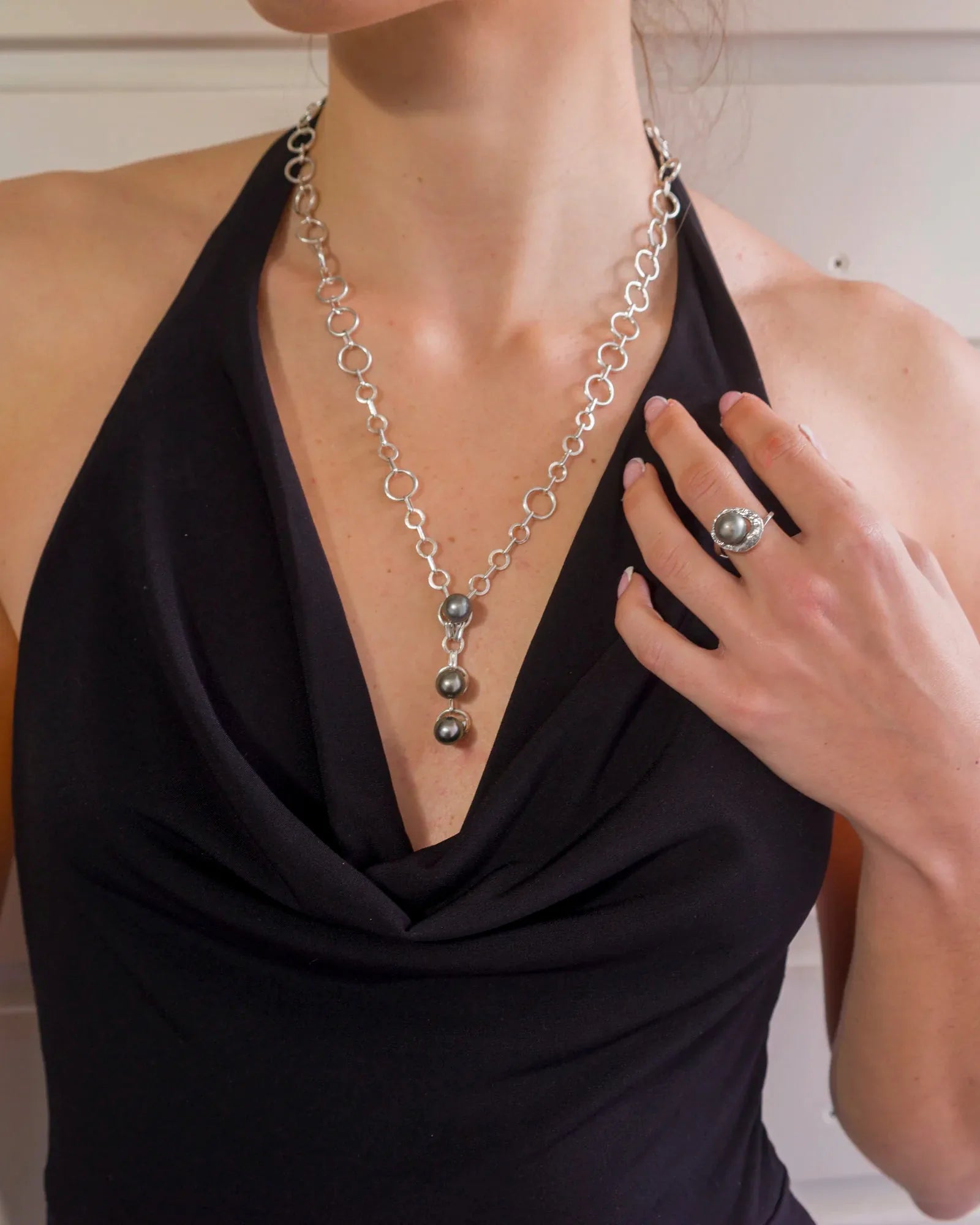
Each Tahitian pearl is unique in the world. Its color, ranging from silvery gray to deep black, peacock green, or aubergine, cannot be reproduced artificially. Its shape, reflections, and orient are unique to it alone.
At Honu, I select each pearl individually. I know their origin, their quality, and their history. A piece of jewellery with a Tahitian pearl is the beginning of a relationship.
And like any relationship, it requires a little attention. A little time. A little love.
In return, your pearl will accompany you for decades. It will bear the traces of important moments in your life.
The Tahitian pearl is a living treasure that evolves with you.
Discover our creations featuring Tahitian pearls:
See also: How to care for your silver jewellery — to take care of your jewellery's setting.