
Article: The Symbolism of Tahitian Pearls: Mystery, strength, and elegance within the jewel
The Symbolism of Tahitian Pearls: Mystery, strength, and elegance within the jewel
The Tahitian pearl carries a symbolism linked to the ocean, protection, and inner strength. Its shades, from grey to peacock green, shift with the light and recall its organic origin. Each pearl has its own presence, slowly shaped by living matter.
Why are Tahitian Pearls so fascinating?
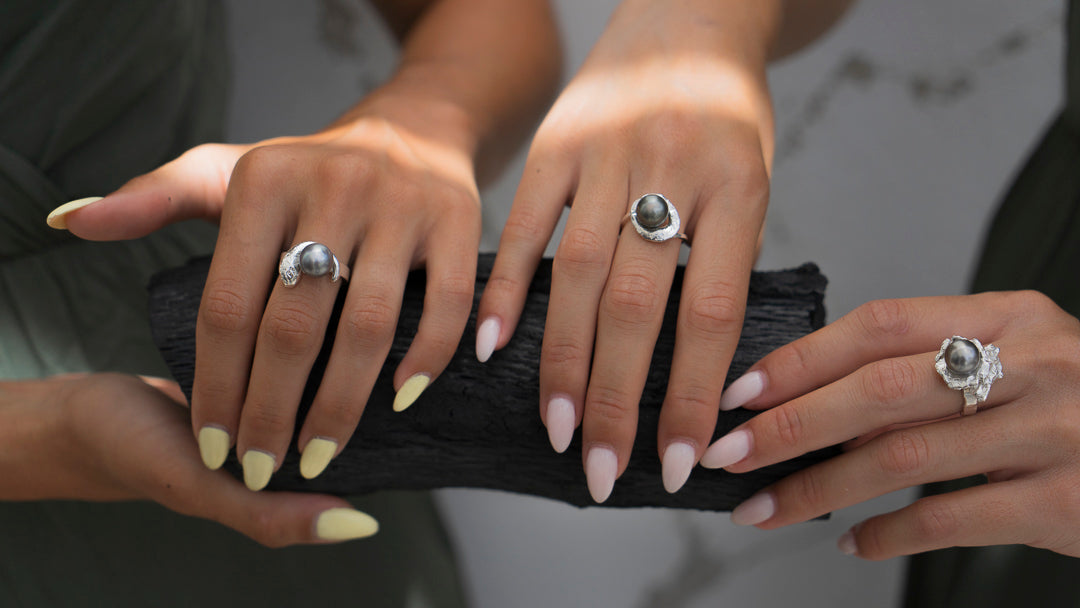
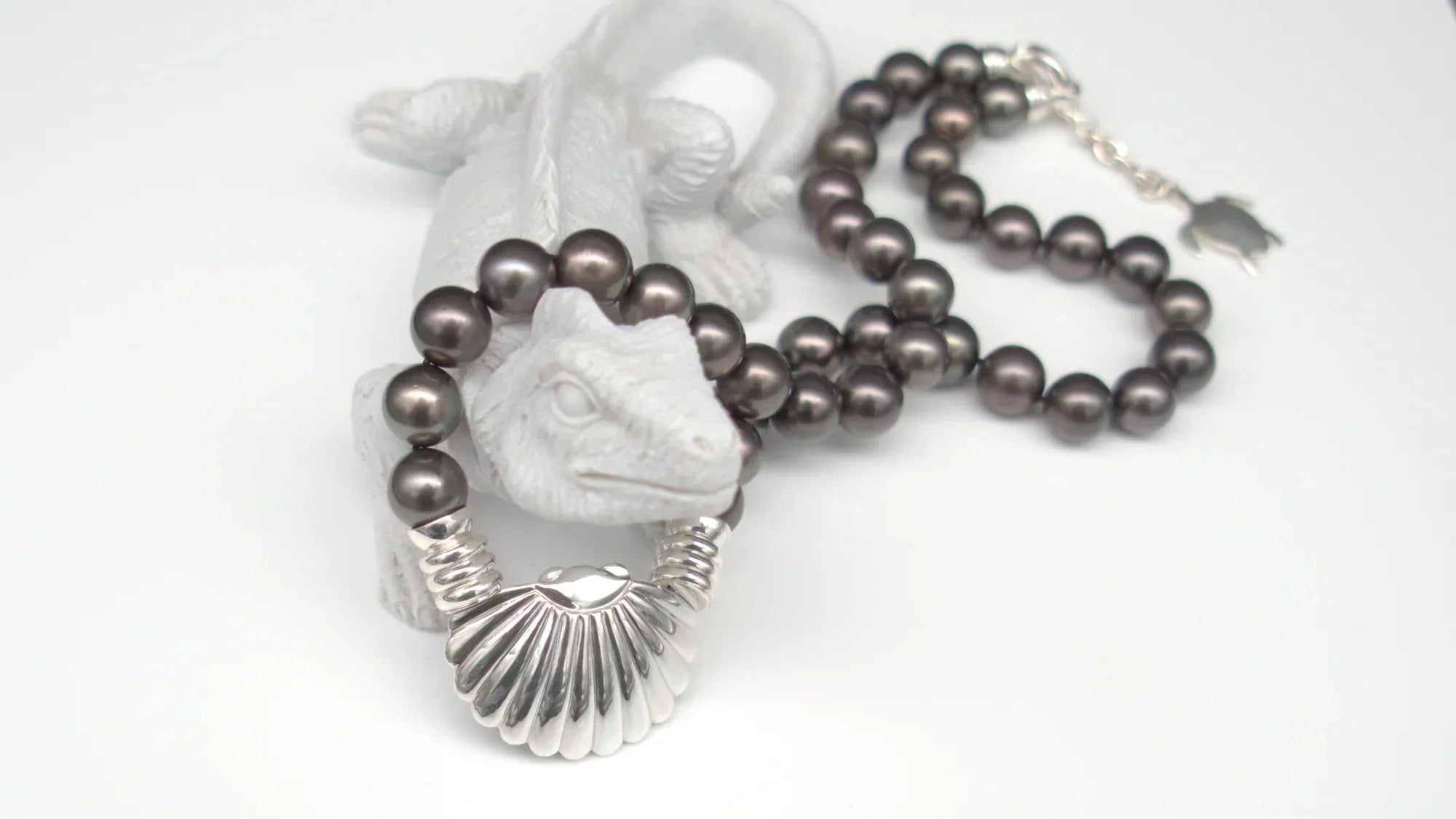
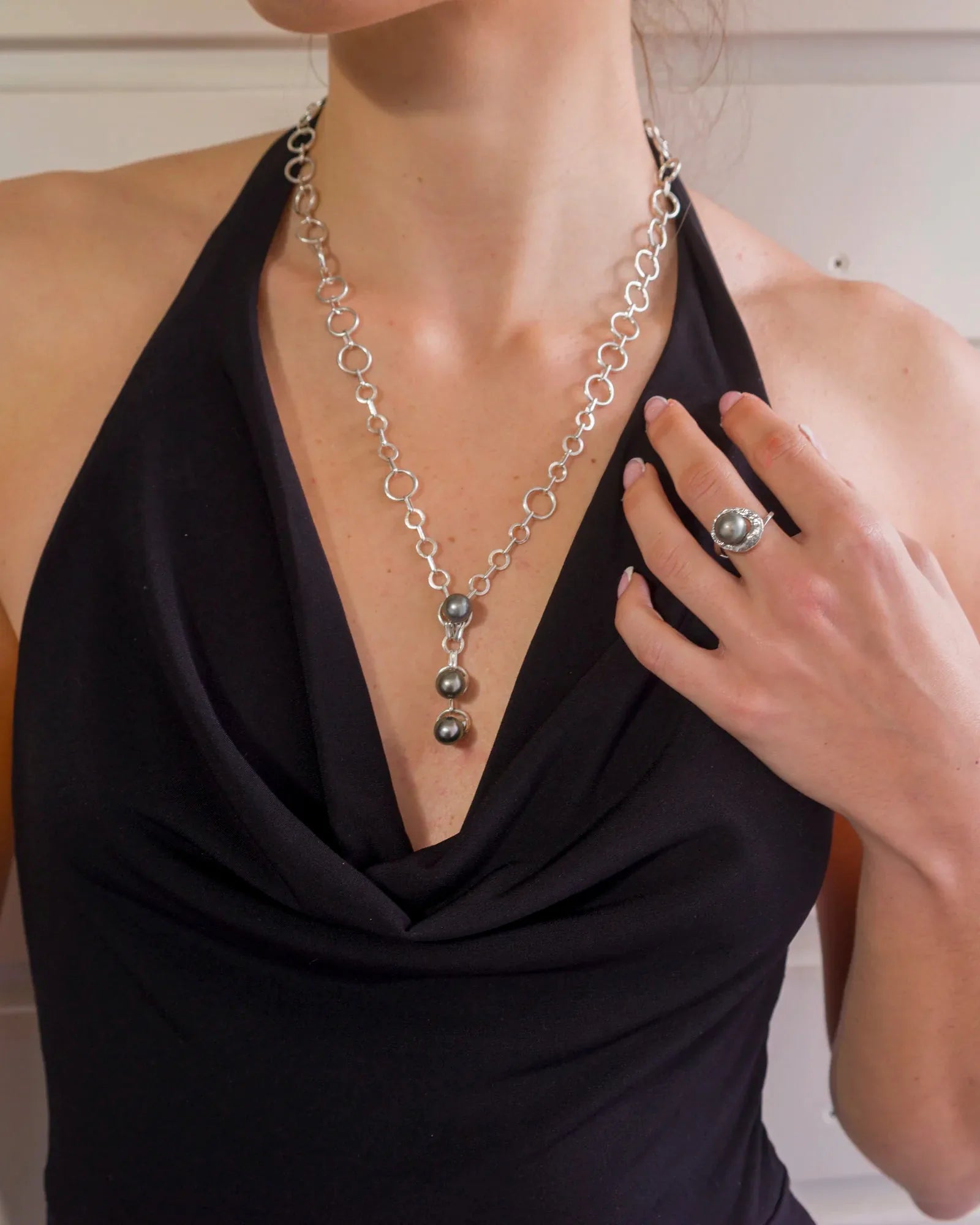
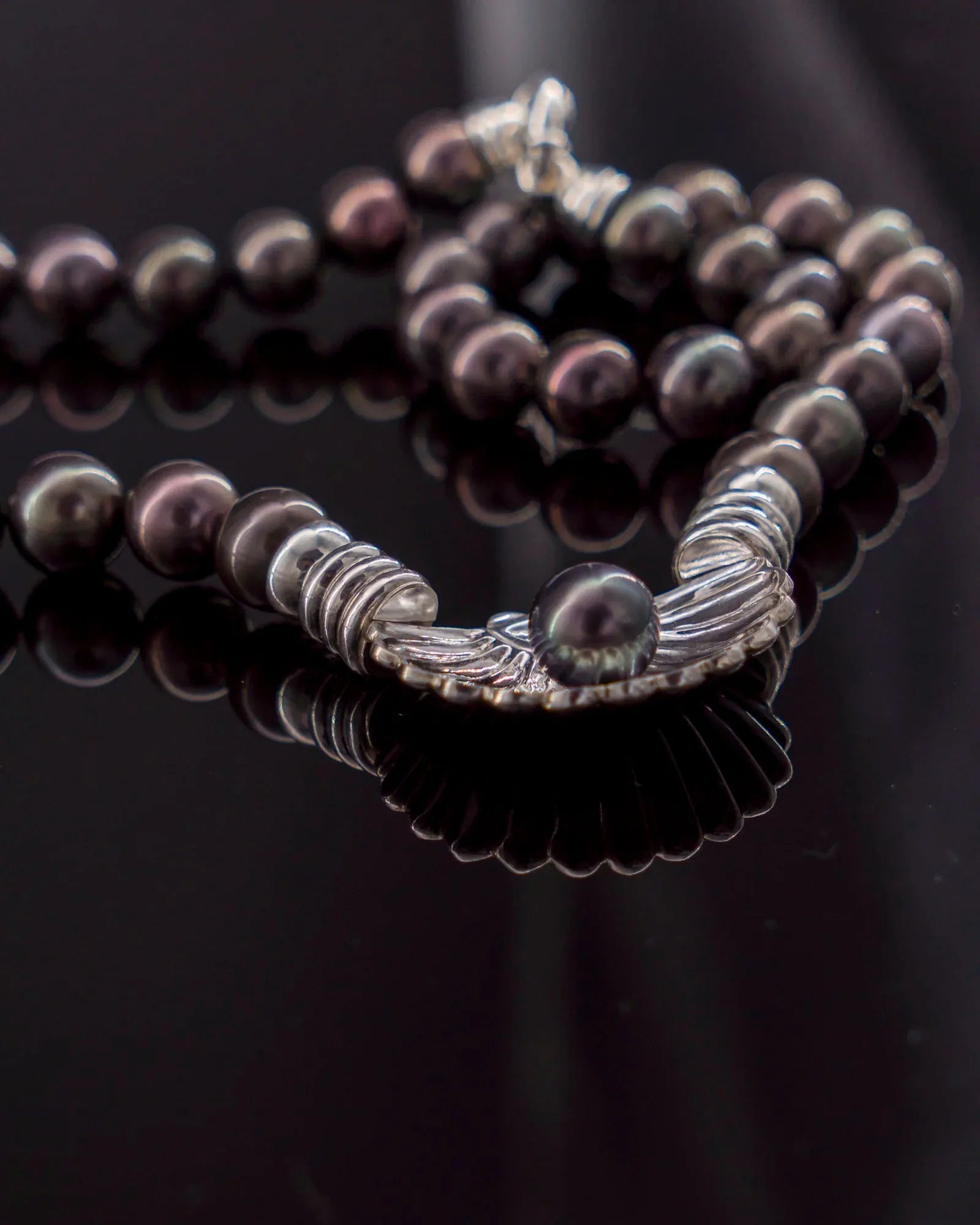
They are known as ‘black pearls’ because they come from an oyster known as the ‘black-lipped oyster’. Their colour palette is far richer than that. Sourced from the lagoons of Polynesia, Tahitian pearls display deep, iridescent hues, ranging from peacock green to steel grey, via aubergine and ocean blue.
But what makes them truly exceptional, beyond their visual beauty, is the powerful symbolism they embody and the way they represent something rare, living and authentic.
Why do we refer to them as ‘living pearls’?
Technical note: the Tahitian pearl is not a living organism in the strict biological sense of the academic definition (it has no active metabolism once formed). But it is described as “living” in traditional jewellery terminology because its organic material remains reactive: it evolves with its environment, feeds off contact with the skin which rehydrates its matrix, and can permanently lose its lustre if it is not worn and cared for. Jewellers even speak of a ‘dead’ pearl to describe one whose lustre has been permanently lost.
This terminology is recognised by Polynesian pearl farmers, by major international jewellery houses (Mikimoto, Tasaki, Wan Pearls) and recognised by the leading authorities GIA (Gemological Institute of America) and CIBJO (World Jewellery Confederation), which classify pearls as organic gems as opposed to mineral gems.

A treasure born of life
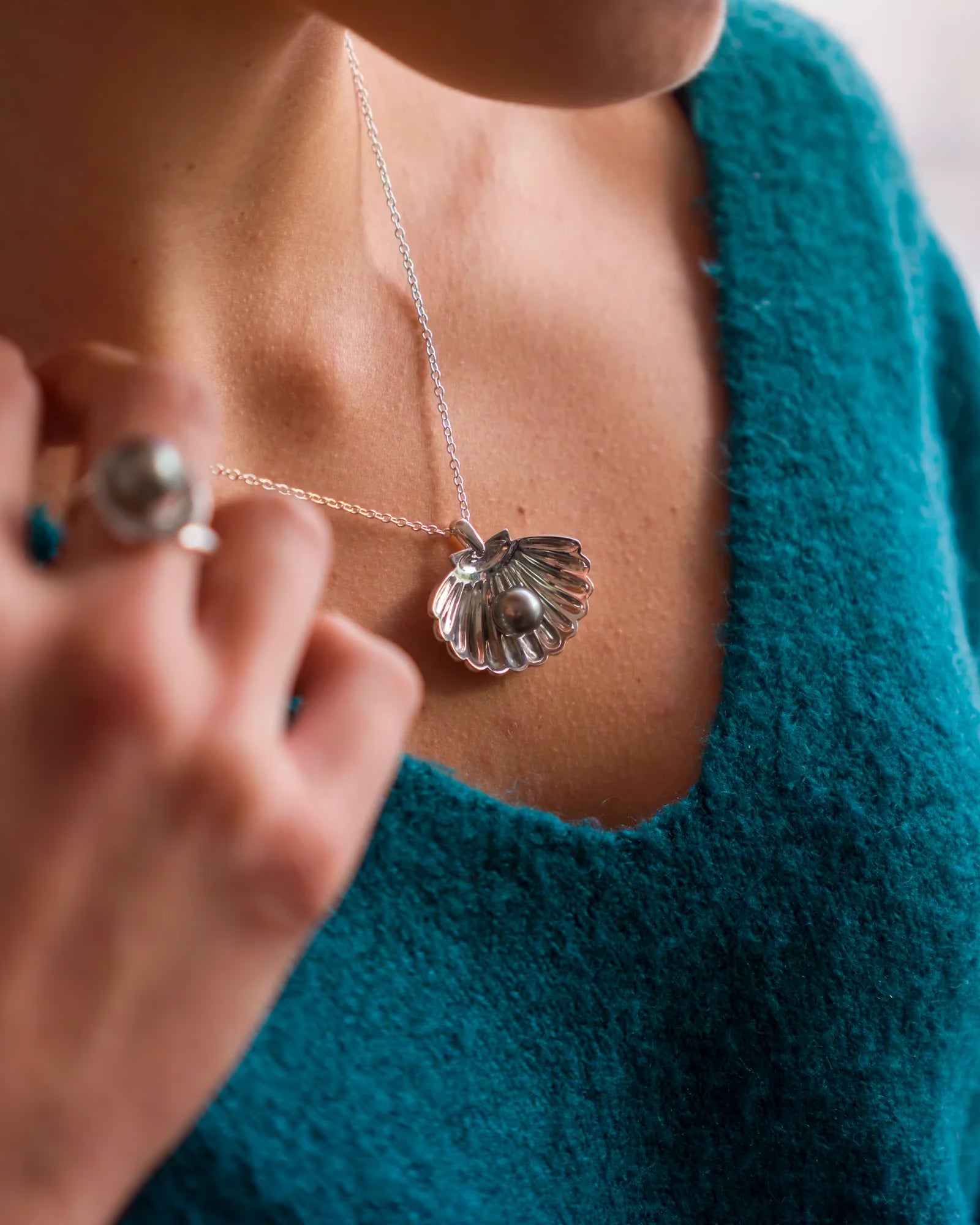
Every Tahitian pearl is nature’s response to a slow and almost secret process. The Pinctada margaritifera pearl oyster accepts a graft, then, layer by layer, produces mother-of-pearl over several years.
This is not a laboratory creation. It is not a process that can be accelerated or standardised. It is nature at work, at its own pace.
The result: no two pearls are alike. Each piece has its own DNA. They are Rare, Living and Unique.

The spiritual significance of the Tahitian Pearl
In Polynesian tradition, the Tahitian pearl is not merely an ornament. It is regarded as a protective talisman, an object steeped in meaning.
In Polynesian cosmogony, the pearl forms a link between the earthly world and the realm of the ancestors. Its dark colour evokes the depths of the oceans, the domain of sea spirits, whilst its iridescent hues reflect the diversity and richness of life. Polynesians attribute protective powers to it: it is said to be capable of warding off evil spirits and attracting prosperity.
Every pearl I incorporate into a Honu creation carries this significance. It is not a belief that is imposed. It is a heritage that is respected.
A symbol of femininity and inner strength
For centuries, the pearl has been associated with femininity, intuition and connection with one’s inner self. But Tahitian pearls go beyond that. They also symbolise inner strength, that quiet power that does not need to shout to exist.
In Polynesian culture, giving a Tahitian pearl is a significant gesture. It is offering a piece of the ocean, a direct link to the elements, a true good luck charm.
The elders regarded them as protective talismans, capable of absorbing stress and negative energies. This belief persists to this day.

The lucky Tahitian Pearl: a Polynesian tradition
In Polynesian culture, giving a Tahitian pearl is a gesture that goes beyond a mere gift. It is offering a piece of the ocean, a direct link to the elements.
Newlyweds traditionally wear Tahitian pearl necklaces at their wedding, a symbol of fertility and marital happiness. This tradition is passed down from generation to generation in Polynesian families. Like the Polynesian turtle, the pearl is a symbol that spans generations. In some families, necklaces have been passed down for several generations, each pearl carrying the history and memories of those who wore it before.
This is also why Honu creations adorned with Tahitian Pearls are often chosen as gifts. It is not a piece of jewellery one buys on a whim. It is a piece of jewellery one chooses for someone, with intention.
Tahitian black pearl: far more than just black
We call it a "black pearl", but that is a simplification. The name “Poe Rava” comes from the pearl oyster Pinctada margaritifera variety cumingii, nicknamed the black-lipped oyster, not from the colour of the pearl itself.
The palette of Tahitian Pearls is far richer: peacock green, steel grey, aubergine, cherry red (exceptionally rare), blue, yellow. These shades are determined by natural factors and change depending on the light and the angle of view. This is what is known as the ‘orient’, the ability of the mother-of-pearl to reflect several colours at once, resulting from the interaction between light and the multiple layers of mother-of-pearl.
Each pearl develops its own unique palette during the minimum 18 to 24 months of formation in the lagoon. This process cannot be controlled or replicated. Of all the grafted oysters, only 1 in 10 will produce a marketable pearl, and of these, fewer than 5% will achieve ‘gem’ quality. This is precisely what makes every Tahitian pearl irreplaceable.
A pearl for those who choose themselves
Unlike mass-produced, standardised jewellery, Tahitian pearls are for those who wish to express themselves with sincerity. They are pearls with character, for people of character.
When you choose a Tahitian pearl, you choose a companion for life. You choose to wear something rare, living, and personal. Our Pièces d’Exception embody this philosophy.
This is what they represent: uniqueness, life, and continuity through time. They are a reflection of the person who wears them.
Discover our jewellery adorned with genuine, top-grade Tahitian pearls in exceptional colours.
Frequently Asked Questions
In Polynesian culture, the Tahitian pearl is considered a protective talisman. It symbolizes inner strength, serenity, and authenticity. The ancients believed that it absorbed stress and negative energies from the wearer. To give a Tahitian pearl is to give a piece of the ocean and a true good luck charm.
Each Tahitian pearl is the result of a natural process that takes several years. The Pinctada margaritifera pearl oyster deposits layer after layer of nacre around a graft, at its own pace. This process cannot be accelerated or standardized. As a result, each pearl has its own shape, its own nuances, and its own "DNA."
Contrary to their nickname "black pearls," Tahitian pearls offer an exceptional palette of colors: peacock green, steel gray, eggplant, ocean blue, and many other iridescent hues. These shades come from the mother-of-pearl of the black-lipped oyster (Pinctada margaritifera) found in the lagoons of French Polynesia.
Giving a Tahitian pearl is giving something rare, alive, and personal. Unlike standardized, mass-produced jewellery, each pearl is unique and carries a strong symbolism: authenticity, connection with oneself, and quiet strength. It is a gift for people who choose themselves.